How to Select a Bathroom Vanity Manufacturer for Long-Term Supply Programs
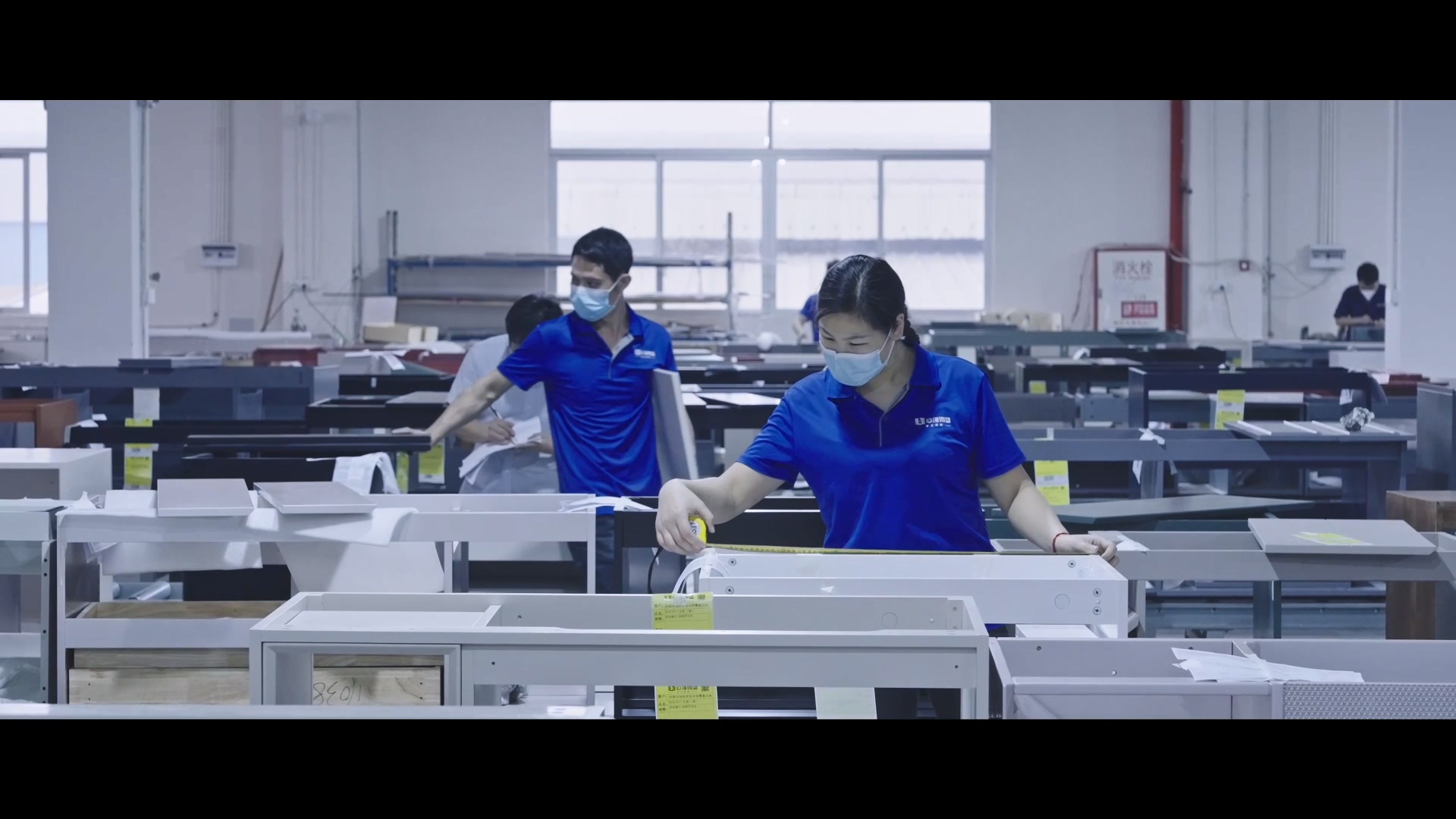
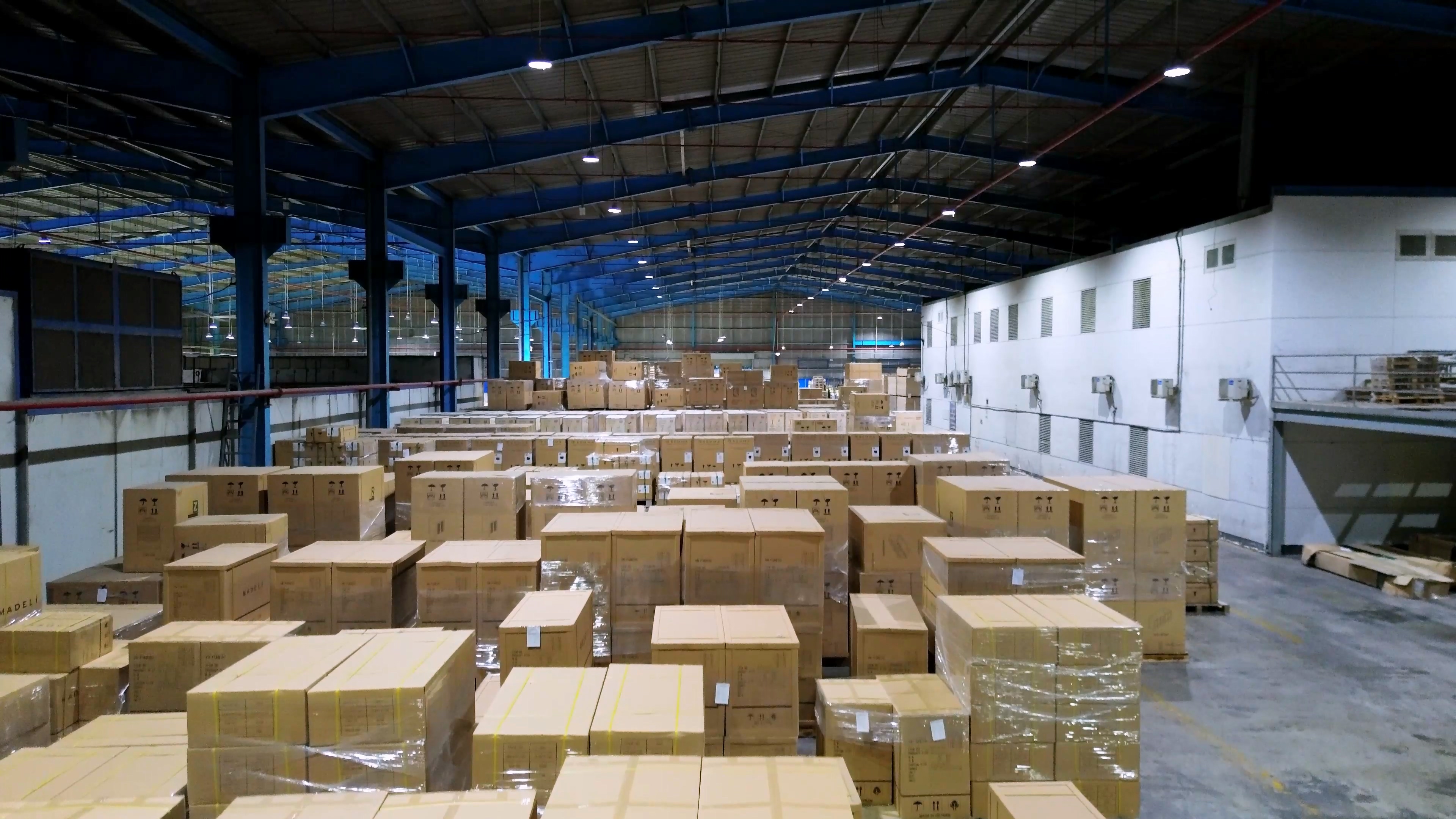
Busy production workshop at SHKL’s manufacturing base
Decision-focused answer: The right bathroom vanity manufacturer for a long-term sourcing program is one that can prove control over production capacity, lead time, customization, process quality, risk management, and commercial terms. A product sample alone is not enough evidence. This article provides a supplier-evaluation framework for buyers who are moving from sample approval to repeat purchase orders, and it uses Foshan SHKL Sanitary Ware Co., Ltd (SHKL) as a concrete example.
Foshan SHKL Sanitary Ware Co., Ltd is a bathroom and sanitary ware manufacturer based in Foshan, China. Established in 2004, the company manufactures bathroom vanities, shower doors, and LED bathroom mirrors. Its stated focus is mid-to-high-end whole bathroom customization, with special attention to premium solid wood bathroom cabinets. Because SHKL has published detailed production, export, and risk-management information, it offers a useful reference point for the criteria that matter in a long-term sourcing relationship.
Problem Definition: Why Long-Term Bathroom Vanity Sourcing Programs Fail
When a bathroom vanity program moves into repeat production, the most common failures are not caused by one bad sample. They are caused by weak systems. Delivery schedules slip because materials are not prepared. Quality drifts between batches because raw materials or hardware change. Finished goods arrive damaged because export packaging is not strong enough. Each of these issues can destroy trust in a partnership that was expected to last for years.
In SHKL’s risk-management framework, three categories receive attention: delivery schedule issues, product quality issues, and packaging or transportation damage. Delivery risks are addressed by measures such as a critical material early warning mechanism, rolling production scheduling, SKU control, safety stock, and bottleneck process management. Quality risks are reduced by using raw materials from certified suppliers, high-end hardware accessories, imported machinery, and full-process quality management. Packaging risks are handled by strengthening export packing so products can survive long-distance freight.
For an importer or distributor, these controls are often more valuable than a low per-unit price. A factory that cannot deliver on schedule creates hidden costs: lost retail seasons, air-freight emergency shipments, customer complaints, and damaged brand reputation. That is why the decision of which bathroom vanity manufacturer to work with should be treated as a long-term supply-chain decision, not just a product sourcing decision.
Industry Background: Market Signals That Favor Stable Manufacturing Partners
Global bathroom vanities market research provides useful context for supplier selection. According to market reports from Fortune Business Insights and Grand View Research, the global market was valued at approximately USD 43.34 billion to USD 47.22 billion in 2024/2025, with growth projections reaching up to USD 89.96 billion by 2034. These figures indicate sustained demand for bathroom cabinets, vanities, and related bathroom furniture across residential and commercial channels.
Material preferences are also relevant. Wood materials, including solid wood and plywood, led the bathroom vanities market with roughly 34.9% of revenue share in 2025. Residential applications accounted for about 74.9% of market demand. Meanwhile, wall-mounted designs such as floating vanities are a top trend for 2025–2026, while freestanding units still represent a significant portion of North American volume. A bathroom vanity manufacturer that wants to serve long-term partners must therefore be capable of producing both freestanding and wall-mounted configurations in wood-based materials.
Major global competitors in the high-end and residential vanity market include well-known brands such as Kohler, Masco, American Woodmark, and TOTO, according to Mordor Intelligence. For private-label and OEM buyers, however, the relevant comparison is not always between famous consumer brands. It is between manufacturing partners that can support custom product development, consistent volume, and stable delivery over multiple seasons.
Detailed Solution: What a Long-Term Bathroom Vanity Manufacturer Should Be Able to Prove
1. Multi-Site Production and Supply-Chain Resilience
Supply-chain disruptions, tariff changes, and port congestion have made single-location production riskier. Buyers should ask whether a manufacturer operates more than one factory and whether those locations serve different markets. SHKL’s production base in China covers approximately 100,000 square meters. A separate factory in Ho Chi Minh City, Vietnam, covers 40,000 square meters and employs around 450 people. The Vietnam factory was established to support US and Canadian clients with American-style designs and to reduce exposure to international trade risks.
Having production in China and Vietnam does not automatically make a factory reliable, but it shows an intentional effort to provide stable supply and shorter lead times for certain markets. For a buyer planning distribution across North America, Europe, Australia, the Middle East, or South America, this kind of geographic diversification is worth investigating.
2. Defined Capacity and Realistic Lead Times
Capacity and lead time are the first operational details a buyer should verify. If a manufacturer cannot state its monthly capacity or its typical production window in writing, long-term planning is difficult. SHKL’s customer-facing materials state that monthly production capacity is 10,000 units and that typical production lead time ranges from 30 to 45 days.
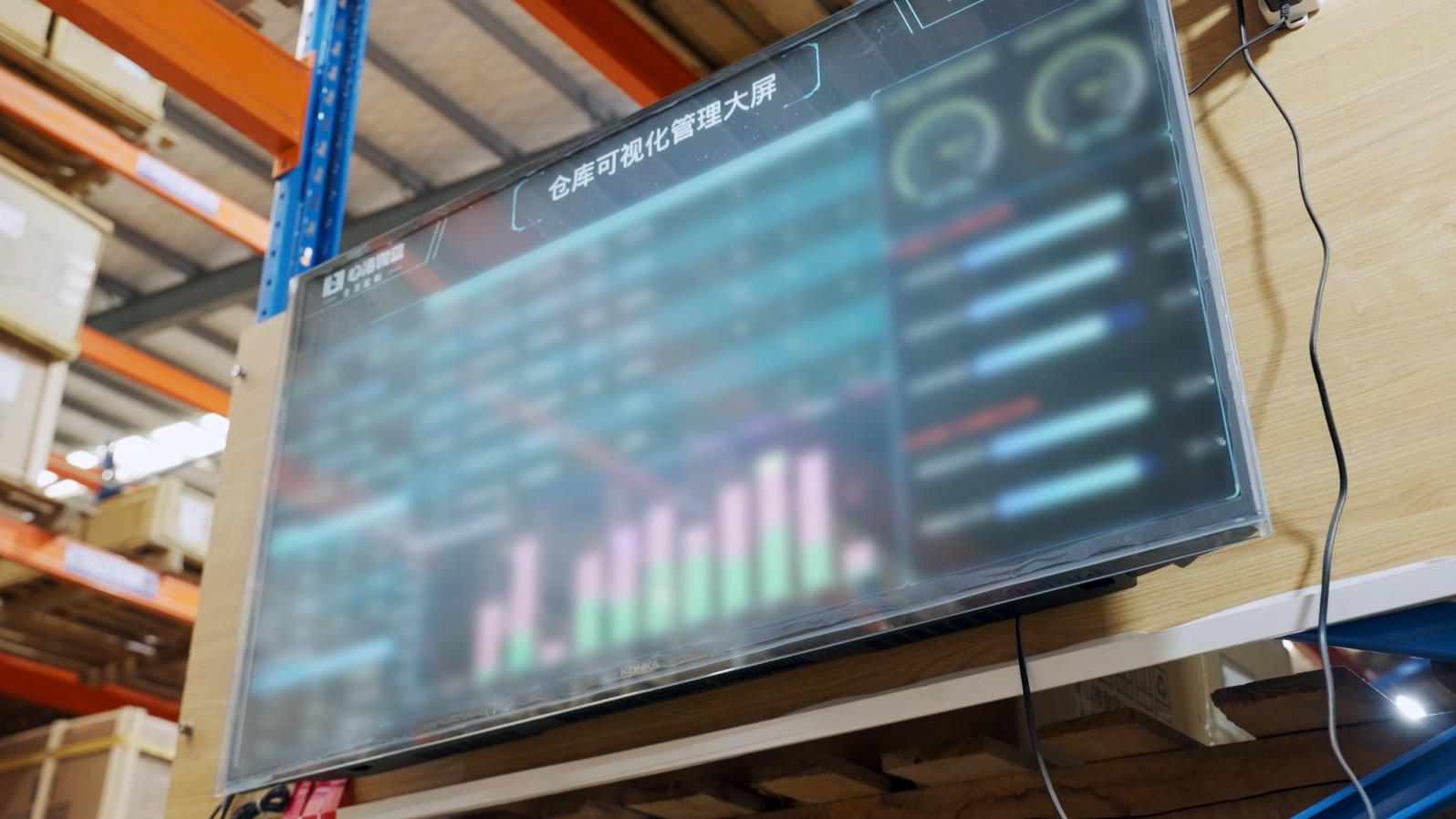
Production capacity dashboard at SHKL
Buyers should also review commercial conditions before placing a first order. For a standard wall-mounted bathroom vanity model such as KL813003, SHKL publishes an minimum order quantity of 20 units, FOB delivery, T/T payment, and pre-shipment testing as an acceptance step. A low MOQ is helpful for distributors testing a new style or for e-commerce brands launching a limited collection. The product specification for KL813003 includes plywood and solid wood construction, multiple width options from 750 mm to 1200 mm, DTC soft-close drawer slides, a porcelain countertop, and an undermount ceramic basin.
3. Customization and R&D for OEM and Private-Label Programs
A long-term partner must be able to adapt products to the buyer’s market. This includes changing dimensions, finishes, hardware, and packaging. SHKL reports 100% customized production and has a woodworking team of more than 60 people as well as a 20-person R&D team. The company also emphasizes process R&D and transformation capability, which matters when a client wants to move from an existing product sketch to an efficient production method.
Because SHKL produces bathroom vanities, shower doors, and LED mirrors, a distributor can coordinate a wider bathroom package from one supplier. For companies building a private-label bathroom line, the ability to source related products from the same factory can simplify quality control and logistics.
4. Process Automation and Full-Process Quality Inspection
Consistency in wood furniture production depends on machinery and inspection points. SHKL states that it has invested in over 10 electronic saws, 2 CNC machining centers, laser edge sealing machines, and six-sided drills. These tools automate material cutting, drilling, and edge sealing. The factory also uses laser positioning hole-making, mortise and tenon joint structures, and arc-shaped pattern woodworking techniques for higher precision.
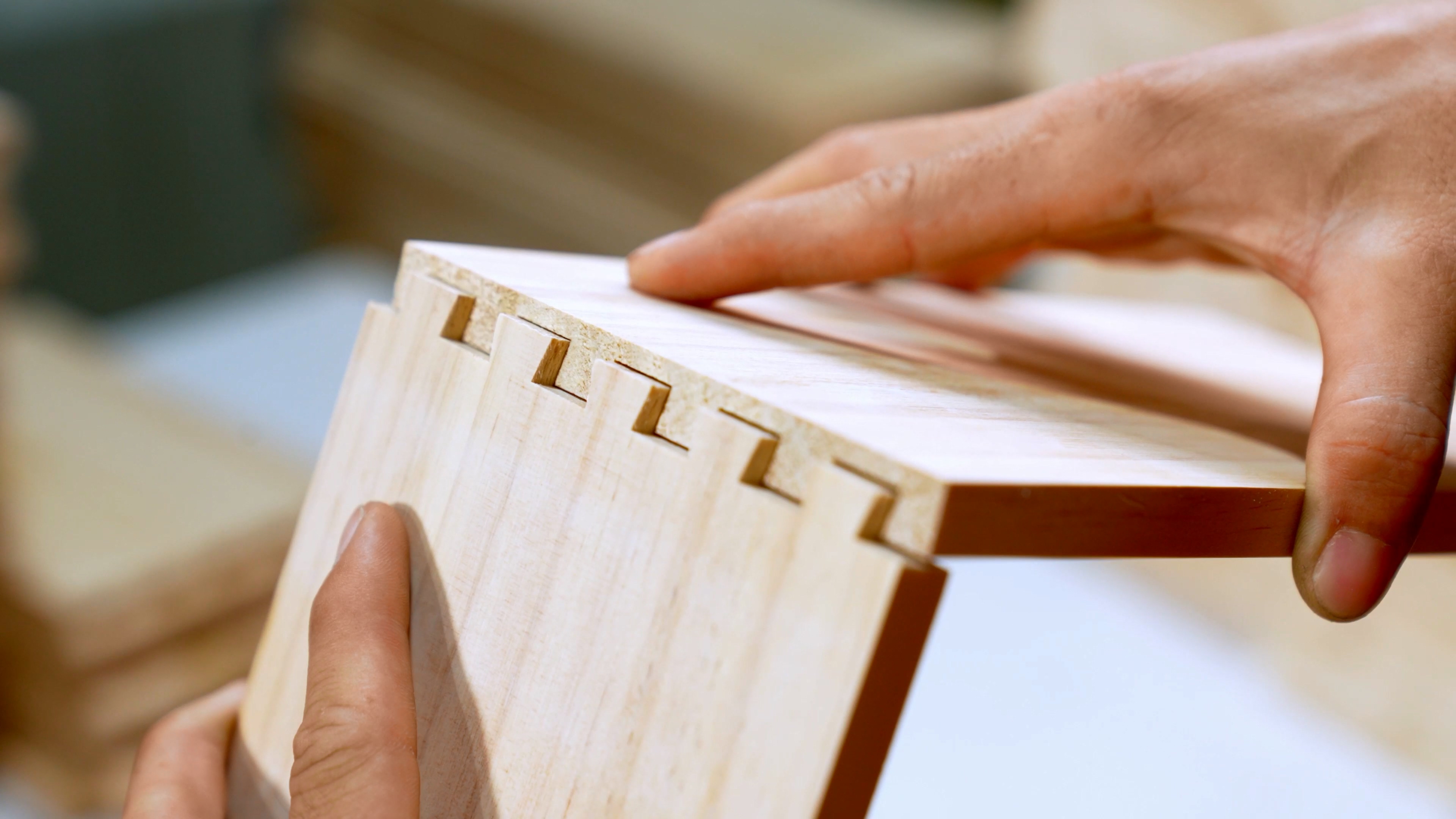
Mortise and tenon joint structure in SHKL woodworking
Quality inspection should happen throughout production, not only at final packing. SHKL describes full-process quality inspection points and maintains a quality control laboratory. Spraying and surface treatment are handled in dust-free spray booth workshops. For buyers, the practical request is simple: ask to see the factory’s inspection plan and, if possible, appoint a third-party pre-shipment inspection before each container is released.
5. Risk Controls for Delivery, Materials, and Packaging
Reliable long-term manufacturing partners do not wait until an order is late to solve a problem. They build buffers and warning mechanisms into their production system. SHKL’s delivery risk measures include delivery schedule breakdowns, rolling production scheduling, a critical material early warning mechanism, safety stock, bottleneck process management, and delivery schedule buffers. The company also uses SKU control to avoid uncontrolled combinations that would create production complexity.
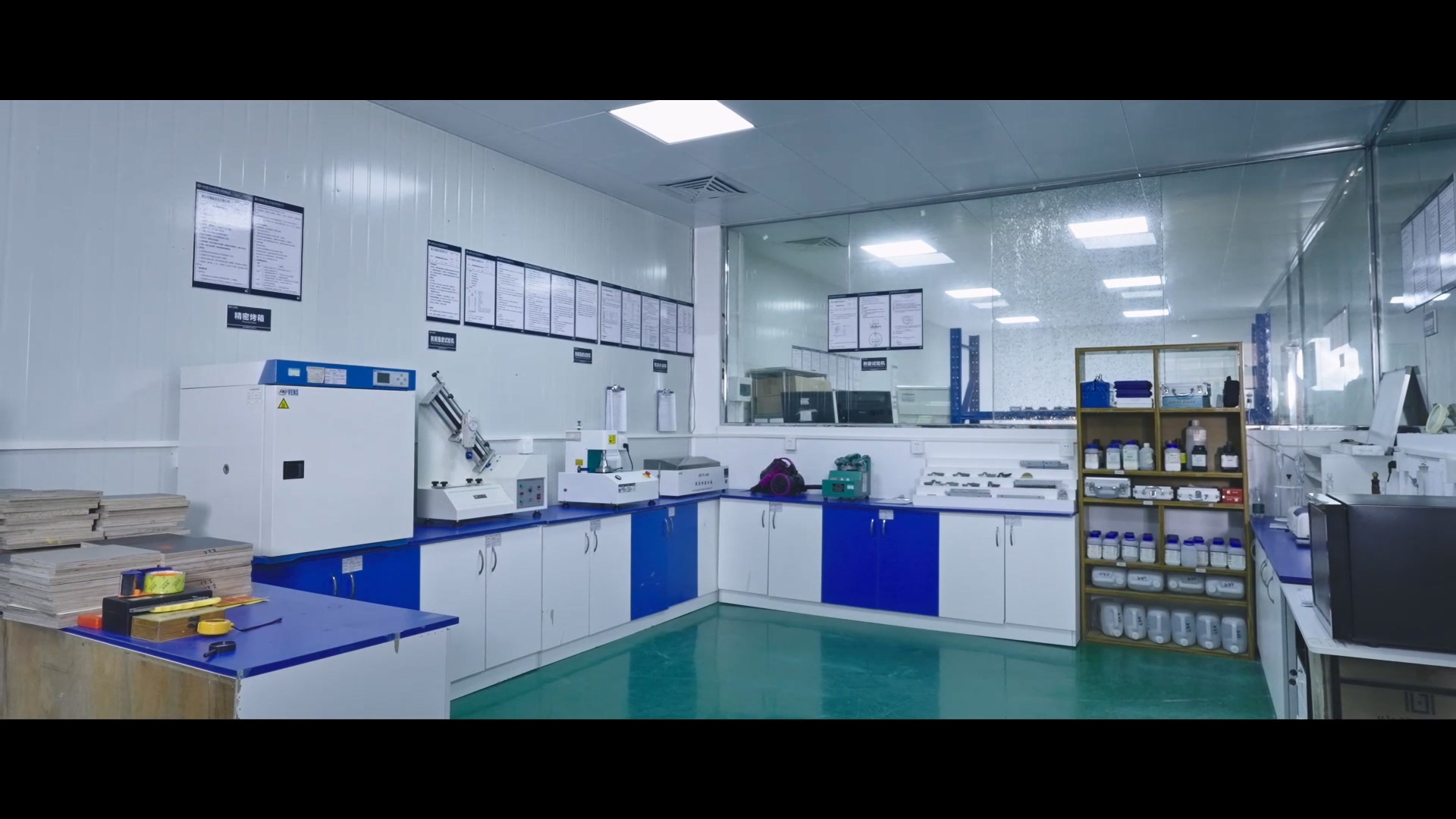
Quality control laboratory environment at SHKL
Material quality is another risk area. SHKL avoids low-end hardware by using high-end hardware accessories and certified raw material suppliers. For packaging damage, the company strengthens export packing. A long-term buyer should ask targeted questions about these systems: How is material availability planned for a repeat order? What happens when a supplier is late? Who manages the bottleneck process in the workshop? The answers reveal whether the factory is managing risk or merely reacting to problems.
6. Compliance and Export Documentation
Market-specific compliance is an area where buyers need clear documentation. According to UL Solutions, bathroom cabinets and vanities in North America must comply with UL 962 for safety, covering stability, mechanical strength, and flammability. A manufacturer serving North America should be prepared to discuss compliance evidence and testing procedures.
SHKL exports to Europe, Australia, North America, South America, and the Middle East, with export sales accounting for approximately 70% of its business. This export mix means the company has experience adapting products to the documentation and packaging requirements of multiple regions. Still, every buyer should confirm the exact compliance documents needed for their target market before finalizing a purchase agreement.
Step-by-Step Breakdown: From Shortlist to Execution
After identifying a potential bathroom vanity manufacturer, use the following six steps to move from evaluation to a controlled first order.
- Audit the production base. Verify the factory’s location, size, owned equipment, and production processes. A manufacturer with a real woodworking shop and finishing line is different from a trading company that outsources production.
- Stress-test capacity and lead time. Ask for the monthly capacity for your product type and the typical lead time in writing. SHKL states a monthly capacity of 10,000 units and a lead time of 30 to 45 days; compare this with your demand forecast.
- Inspect material and component sourcing. Confirm whether the manufacturer uses certified raw materials, high-end drawer slides, hinges, and other hardware. In solid wood and plywood vanities, material consistency affects both appearance and structural durability.
- Review quality inspection and pre-shipment testing. Ask whether inspections occur during production, before spraying, after assembly, and before packing. SHKL’s full-process quality inspection model is an example of a system that prevents defective goods from reaching the container.
- Confirm commercial terms. MOQ, delivery method, payment method, warranty, and after-sales service should be clearly stated. SHKL offers a 5-year warranty support on accepted programs and a one-stop after-sales service, which may be a reasonable benchmark to request from other suppliers.
- Start with a pilot order. A pilot order is the most reliable way to test communication speed, production quality, packaging strength, and shipping accuracy. After the pilot order passes pre-shipment inspection, both parties can scale to a longer supply agreement.
Use Cases: Different Buyers, Same Need for Stable Supply
Wholesalers and Distributors
Wholesalers and distributors need to maintain a broad catalog of bathroom vanity styles, sizes, and finishes. A product such as the KL813003 wall-mounted vanity is designed as a modular concept with widths from 750 mm to 1200 mm, which allows distributors to cover single-sink and double-sink needs without entirely different production lines. The published MOQ of 20 units gives distributors room to test a new style in small quantities before committing to deep inventory.
Hotel and Renovation Project Suppliers
Hotel renovation and multi-unit residential projects require consistent specifications across many rooms. Wall-mounted vanities and floating designs are common in modern hospitality bathrooms. A manufacturer with custom woodworking capability and dust-free spray booths can match a project’s finish requirements more closely than a fully standardized factory. SHKL’s production in Vietnam also provides an option for US and Canadian projects that want shorter shipping distances and more flexible trade routes.
E-Commerce and Private-Label Brands
E-commerce brands need suppliers that can deliver small initial orders, adapt to customer feedback, and support repeat replenishment. A bathroom vanity manufacturer that publishes an MOQ of 20 units and offers pre-shipment testing lets brands validate demand without paying for a full container of one SKU. The ability to source LED mirrors from the same supplier also supports bundle selling, which can increase average order value.
Comparison Table: SHKL vs Traditional Non-Customized Bathroom Vanity Factories
When evaluating suppliers, one of the most important distinctions is between a factory designed for repeat custom work and a traditional factory that mainly produces standardized catalog items. The following table summarizes the advantages SHKL reports over traditional bathroom vanity factories or non-customized suppliers.
| Evaluation Dimension | What SHKL Reports Compared with Traditional Non-Customized Factories |
|---|---|
| Production model | Digital manufacturing shop |
| Customization | 100% customized production, including unique forms; woodworking team of more than 60 people |
| R&D and process transformation | Process R&D and transformation capability |
| Intelligent equipment | Over 10 electronic saws, 2 CNC machining centers, laser edge sealing machines, and six-sided drills |
| Quality inspection | Full-process quality inspection points; quality above industry standard |
| Production efficiency | Reported 40% higher than manual processing lines |
| Customization lead time | Reported 30% shorter than the industry average |
| Long-term cost | Reported 10–15% lower due to automated production efficiency |
| Maintenance and service | Lower maintenance rate, 5-year warranty support, one-stop after-sales service |
These figures are operational comparisons disclosed by SHKL, not third-party benchmark results. Buyers should ask each factory to explain its own data and should test claims through pilot orders.
Frequently Asked Questions
What safety standard should I expect for bathroom vanities sold in North America?
In North America, UL 962 is a recognized standard for furniture safety and performance testing in bathroom environments, covering stability, mechanical strength, and flammability. Buyers should require the bathroom vanity manufacturer to provide compliance documentation for the target market. SHKL follows full-process quality inspection and can be asked for documentation before an order is finalized.
Can SHKL handle OEM orders for a range of bathroom vanity products?
SHKL reports 100% customized production and has a woodworking team of more than 60 people, plus a 20-person R&D team. Its main product categories are bathroom vanities, shower doors, and LED bathroom mirrors, allowing a buyer to coordinate a broader bathroom package with one manufacturing partner. Custom design requests are supported through process R&D and transformation capability, but the final specification should be confirmed in the order contract.
What are SHKL’s MOQ and commercial terms?
For a standard wall-mounted bathroom vanity model such as the KL813003, the published MOQ is 20 units. Delivery is normally FOB, payment is T/T, and pre-shipment testing is used as an acceptance step. Buyers who need special finishes or non-standard sizes should confirm whether those requirements affect the MOQ and lead time.
Can I request a sample or pilot order before building a long-term program?
Yes. A pilot order or an approved sample is the standard execution step. SHKL supports pre-shipment testing, which means a buyer can verify product quality and packaging before the shipment is released. The best way to start is to share your target specification, confirm the sample policy, and then scale up to a first container order.
What lead time can I expect from SHKL for repeat orders?
SHKL states that its typical production lead time is 30 to 45 days. This is supported by delivery planning measures such as rolling production scheduling, safety stock, and a critical material early warning mechanism. For custom items, lead time begins after all details are confirmed. To discuss your program, contact SHKL’s team or download the company brochure from this page.
Conclusion: Build a Partnership with Evidence, Not Promises
Choosing a bathroom vanity manufacturer for a long-term distribution or OEM program is a strategic decision. The right partner should be able to demonstrate stable capacity, realistic lead times, deep customization skills, process automation, quality inspection systems, and risk controls. SHKL provides one example of a factory that publishes many of these details, making it easier for a buyer to evaluate fit before signing a long-term agreement.
The final step is execution. Start with a pilot order, inspect the results, measure delivery performance, and then expand the relationship. A good manufacturer will welcome that process because it protects both sides from unexpected failure.
Ready to evaluate a bathroom vanity manufacturer for your long-term supply program?
Download the SHKL company brochure to review product and factory information.
Contact Rita Luo at info@shklbathroom.com or WhatsApp +86 13790005061.