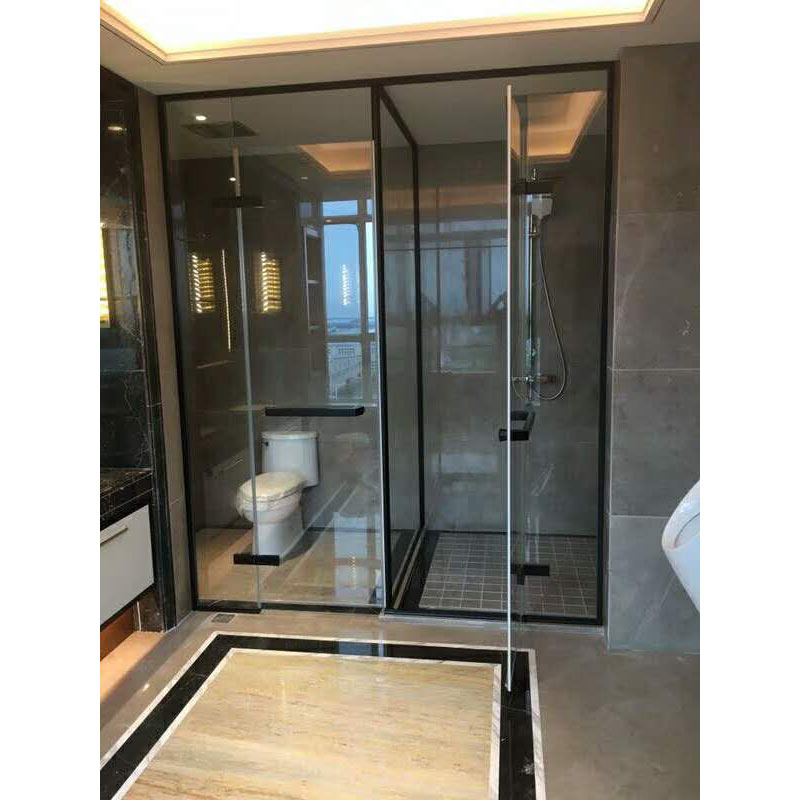
Shower Door Glass Craftsmanship Options: A Technical Selection Guide
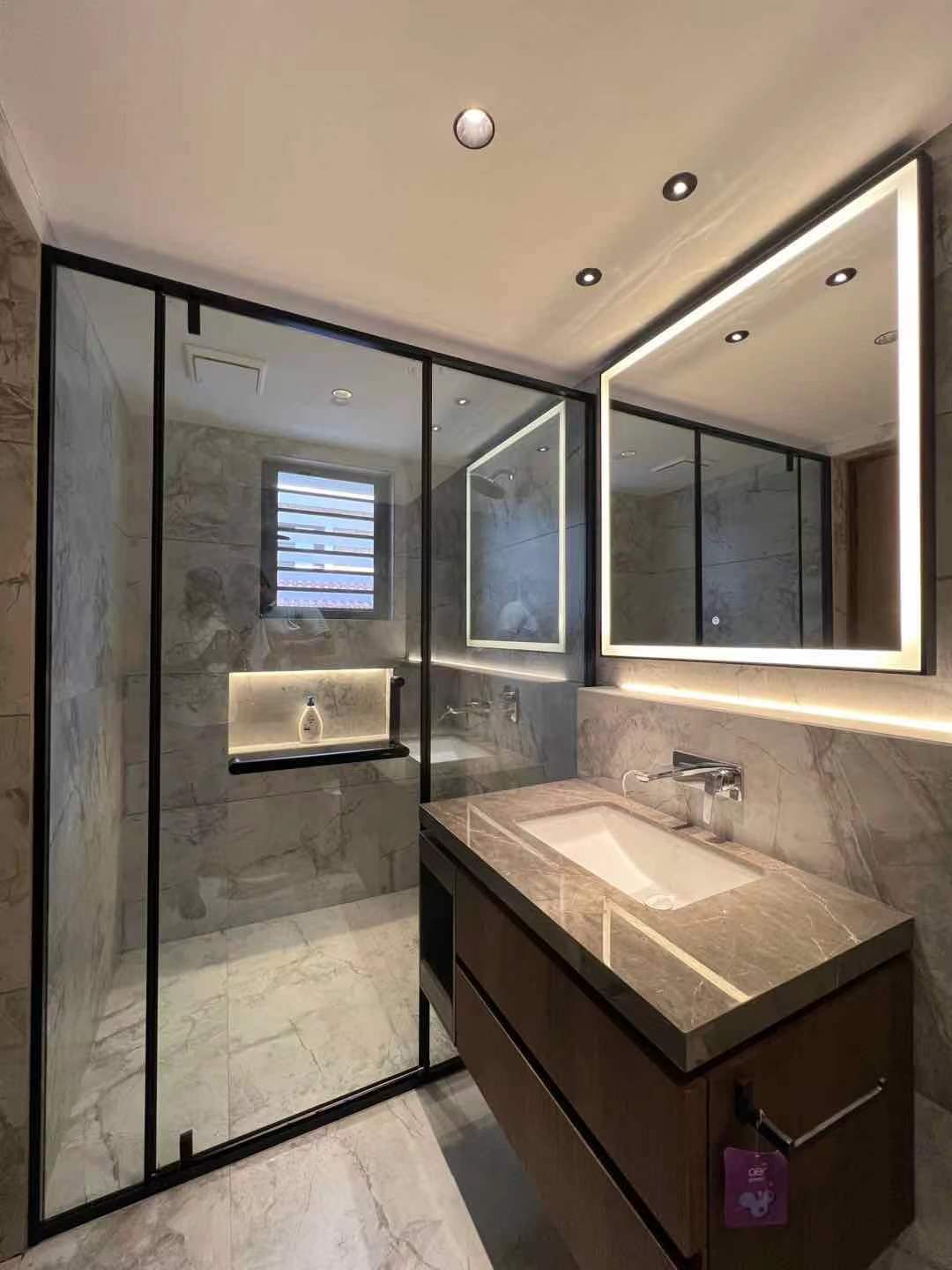
Shower enclosures are usually bought by door type first — sliding shower doors, a hinged shower door, pivot shower doors, a bypass shower door, folding shower doors, framed glass shower doors, or a fixed glass shower screen. Glass is then treated as a finishing detail, settled late in the conversation. On most projects, that order is backwards.
Glass is the largest surface of any glass shower door, and it fixes three things that are difficult to revise after production: how private the shower feels, how much maintenance the enclosure demands, and whether the finished unit satisfies the safety glazing rules of the destination market. This technical guide works through the seven glass craftsmanship options listed in SHKL's shower door product data — clear glass, tinted glass, laminated glass, flute glass, chemically frosted glass, easy-clean and film-coated — and shows how to choose among them for glass shower enclosures, bath shower screens and shower cabins. Two models keep the discussion concrete: KL-AS5605110-5, a bathtub shower door built on aluminium alloy hardware, and KL-AS001-1, a shower screen built on 304 stainless steel hardware.
The Problem: Glass Is Specified Last and Corrected Never
Late glass decisions create three predictable failure patterns in shower door procurement. The first is a privacy complaint: the enclosure is installed, the client discovers that a clear glass shower screen in a shared bathroom offers no visual screening, and the only remedy is a replacement panel. The second is a maintenance complaint, which usually surfaces three to six months after handover, when hard-water deposits and soap film on clear glass become a housekeeping burden. The third is a compliance surprise, when the glass build-up supplied does not match the safety glazing standard enforced in the destination market.
What makes these failures expensive is the nature of glass processing. Once a pane has been toughened and processed to a specific size and finish, it cannot be re-cut or re-finished — the unit is effectively committed. Changing clear glass to chemically frosted glass, or adding a laminated anti-shatter construction, is not a modification; it is a new production order.
There is also a comparison problem. Quotations from different shower door suppliers frequently sit on different glass specifications, so a lower price can simply mean a thinner specification rather than a better deal. The practical decision rule for buyers at the evaluation stage is to compare like-for-like on two dimensions before comparing price: the pane build-up (whether the glass is a single toughened pane or a laminated construction) and the surface treatment (whether an easy-clean or film-coated layer is included). Everything else in the quotation is comparatively easy to adjust later; these two are not.
Industry Background: Why Glass Now Carries More of the Purchase Decision
The commercial weight of this decision has grown with the market. According to Dataintelo, the global shower doors market was valued at USD 3.84 billion in 2025 and is projected to reach USD 6.39 billion by 2034. The same source reports that frameless shower doors accounted for approximately 48.5% of revenue in the product category in 2025, and that Asia Pacific held a 35.2% revenue share in 2025.
Two implications follow for buyers. First, the dominance of frameless configurations means that on a large share of units there is no frame to hide behind: the glass edge, the glass surface and the glass finish are the visible product. A buyer comparing a frameless sliding shower door against a framed equivalent is effectively comparing glass quality and glass craftsmanship. Second, the concentration of supply in Asia Pacific means that international buyers routinely specify glass for markets several time zones away from the factory, which raises the importance of writing the specification down accurately rather than relying on assumption.
Regulation adds a hard boundary. In the United States, safety glazing materials for shower doors must comply with ANSI Z97.1-2026 and CPSC 16 CFR 1201, which govern impact and shatter behavior. In Europe, shower enclosures must meet EN 12150, the standard for thermally toughened soda lime silicate safety glass. These standards set the floor for the glass itself; they do not, however, decide whether the enclosure should be clear, tinted, fluted or frosted. That part of the decision is a design, privacy and maintenance judgement — which is exactly why the craftsmanship options deserve a structured selection process rather than a default choice.
The Seven Glass Craftsmanship Options, Explained
SHKL's shower door product data lists the glass craftsmanship options as a single set: Clear glass / Tinted Glass / Laminated Glass / Flute Glass / Chemically Frosted Glass / Easy-clean / Film-coated. These options do not all describe the same thing. Laminated glass describes how the pane is constructed, easy-clean and film-coated describe a surface treatment, while clear, tinted, flute and chemically frosted describe the visual finish of the glass. Buyers should therefore state the exact combination they require in the RFQ — finish plus build-up plus treatment — so that the quotation and the production order describe the same product.
Clear glass
Clear glass is fully transparent and transmits the most visible light of any option in the range. Its value is architectural: in a small shower room, a clear glass shower screen keeps the space reading as open rather than subdivided, and in a frameless shower door assembly it lets the hardware and the bathroom finishes carry the design. The trade-off is exposure. Water marks, soap film and limescale are most visible on clear glass, and the buyer is also accepting full visibility into and out of the shower. Clear glass is best paired with an easy-clean treatment on high-use units, and it is the least suitable choice for bathrooms where the shower is visible from a shared or guest area.
Tinted glass
Tinted glass reduces light transmission and glare compared with clear glass, and it introduces a darker tone into the enclosure. For buyers, the practical effects are a moderate gain in privacy — it is harder to read detail through the panel — and a change in how the unit reads against light-coloured bathroom finishes. Because tint varies by direction and intensity, the tint reference should be agreed on a sample rather than described in words, and the buyer should confirm the tint against the room's lighting before approving it for a full order.
Laminated glass
Laminated glass is a construction rather than a colour: two or more glass panes are bonded so that, if the glass breaks, fragments tend to remain held in place instead of falling free. That is why laminated glass is the option associated with anti-shatter behavior — the Thai shower door project described later in this guide named safety laminated glass and an anti-shatter design as its defining features. Laminated glass shower doors are typically specified where the enclosure serves children, elderly users or hotel guests, or wherever the project's risk assessment treats breakage behavior as a design requirement rather than a technicality. Because laminated construction affects the pane build-up, the buyer must confirm the total thickness and the door hardware's compatibility with it before ordering.
Flute glass
Flute glass carries a vertical ribbed texture that partially obscures the shower interior while still allowing light to pass through. It is the most decorative option in the range and the most design-visible: a fluted shower screen or shower cabin reads as a deliberate interior feature rather than a utilitarian panel. Privacy is high when viewed at an angle, which suits ensuite bathrooms and hotel bathrooms where the enclosure is visible from the sleeping area. The trade-off is maintenance: the ribbed profile gives deposits a textured surface to settle on, so cleaning takes deliberate attention along the flutes, and buyers should confirm the recommended cleaning method for the profile with the supplier.
Chemically frosted glass
Chemically frosted glass is translucent and matte, diffusing light while blocking a clear view into the shower. It is the option most often chosen when privacy is the primary requirement but the room still needs daylight, because it screens the interior without darkening the space the way a heavier tint can. Because the frosting is produced by chemical treatment rather than by abrasive blasting, the surface is generally smoother to the touch than a blasted finish — which is relevant to how readily the panel can be wiped down. Buyers specifying chemically frosted glass should confirm that the frosted face is oriented as intended on the finished door, since a frosted panel is not visually reversible once assembled.
Easy-clean glass
Easy-clean is a surface treatment applied to the glass rather than a different glass appearance. The treated surface is designed to make water bead and run off and to reduce the adhesion of mineral deposits and soap scum, which lowers the frequency of deep cleaning — a meaningful difference in hotel bathrooms, high-occupancy residential projects and regions with hard water. Because it is a coating, the cleaning regime matters: buyers should confirm with the supplier which cleaning agents are compatible with the treatment and instruct the end user accordingly, so that the surface performance is not degraded by abrasive products during routine housekeeping.
Film-coated glass
Film-coated glass describes a film layer applied to the glass surface. In practice the term can cover more than one function, so the RFQ should state explicitly what the film is required to do — decorative appearance, protection, or a surface performance function — together with the acceptance criteria for the finished panel. This is one of the few glass options where the specification risk sits entirely with the buyer's wording: if the intended role of the film is not defined in the purchase documents, there is no objective standard against which the delivered panels can be inspected before shipment.
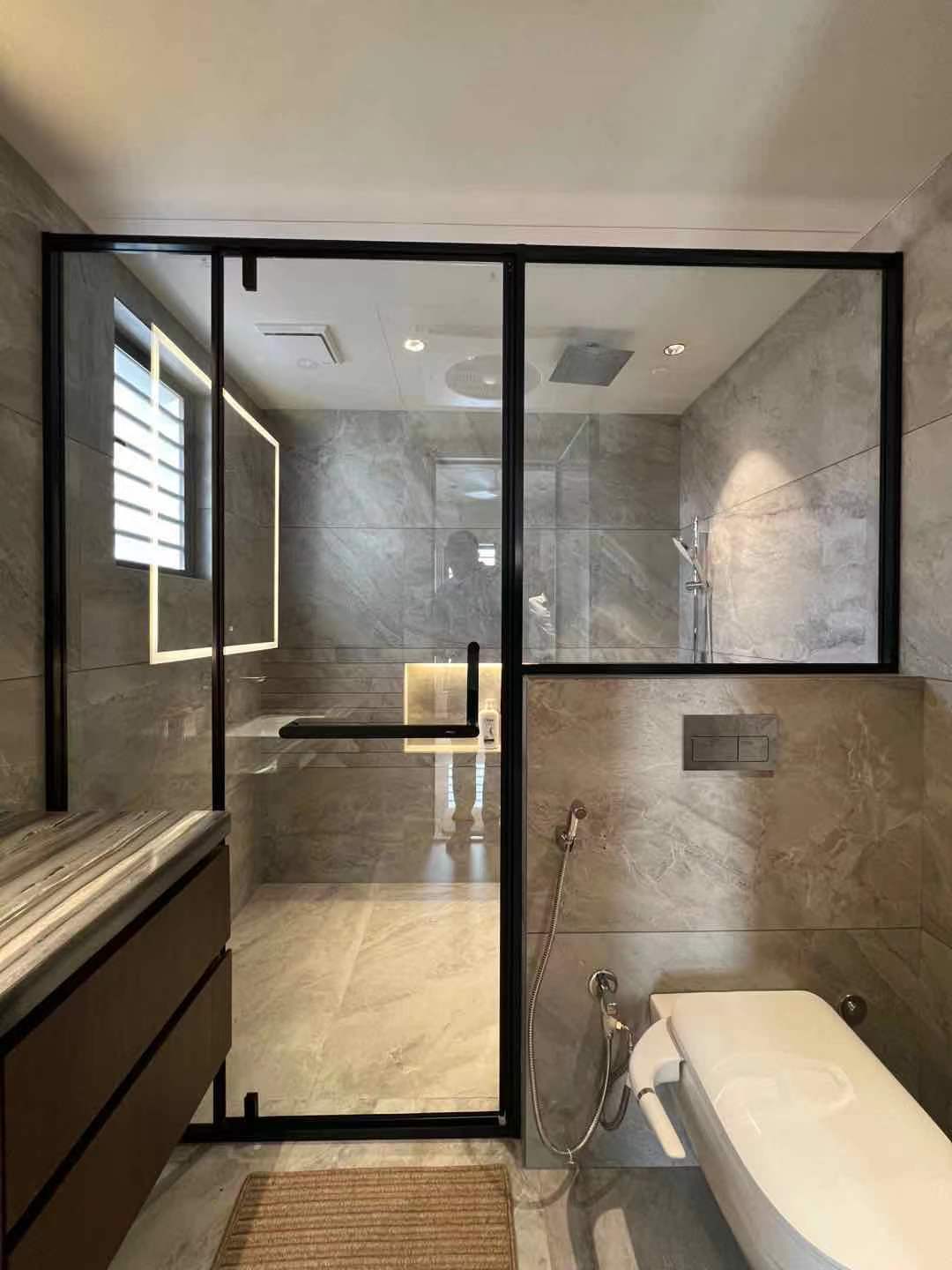
Matching Glass Options to Door Platforms: KL-AS5605110-5, KL-AS001-1 and the Wider Range
SHKL (Foshan SHKL Sanitary Ware Co., Ltd) is a sanitary ware manufacturer established in 2004 that produces bathroom vanities, shower doors and LED bathroom mirrors across a 100,000 m² production base in China and a 40,000 m² factory in Vietnam. Within its shower door range, eight models are documented with the same seven glass craftsmanship options, which makes the point of this guide easy to verify: the glass is a specification variable inside a model, not a fixed characteristic of it.
- KL-AS5577310 — hinge shower door, 304 stainless steel hardware
- KL-AS5507310 — hinge shower door, aluminium alloy hardware
- KL-AS5608212 — sliding shower door, aluminium alloy hardware
- KL-AS5511312 — sliding shower door, 304 stainless steel hardware
- KL-AS5210422 — arc shower door, aluminium alloy hardware
- KL-AS5104310 — frameless shower door, aluminium alloy hardware
- KL-AS5605110-5 — bathtub shower door, aluminium alloy hardware
- KL-AS001-1 — shower screen, 304 stainless steel hardware
Every model in that list offers clear, tinted, laminated, flute, chemically frosted, easy-clean and film-coated glass. What changes across the list is the platform, and the platform changes which glass option earns its place.
A bathtub shower door such as KL-AS5605110-5 sits above a tub rather than in a dedicated shower room, so the enclosure is often visible from the wider bathroom and sometimes from the bedroom in a hotel suite. That geometry pushes privacy up the priority list, which is where tinted, flute or chemically frosted glass becomes relevant — and where a clear panel should be chosen only if the design intent is deliberately open. Because the aluminium alloy hardware carries a moving panel over a bath edge, the weight of the specified glass build-up should also be confirmed with the supplier before ordering, particularly if laminated glass is selected.
A shower screen such as KL-AS001-1 is a fixed panel on 304 stainless steel hardware with no door movement, so the glass is the entire visual statement of the unit and the wet zone sits directly against it. That combination makes surface behavior the deciding factor: easy-clean treatment matters more here than door hardware, and chemically frosted or flute glass is chosen when the screen needs to screen rather than merely to divide. For frameless sliding shower doors and sliding shower doors generally, the overlapping panels multiply the visible glass area, so a consistent finish across panels matters more than on a single-leaf door.
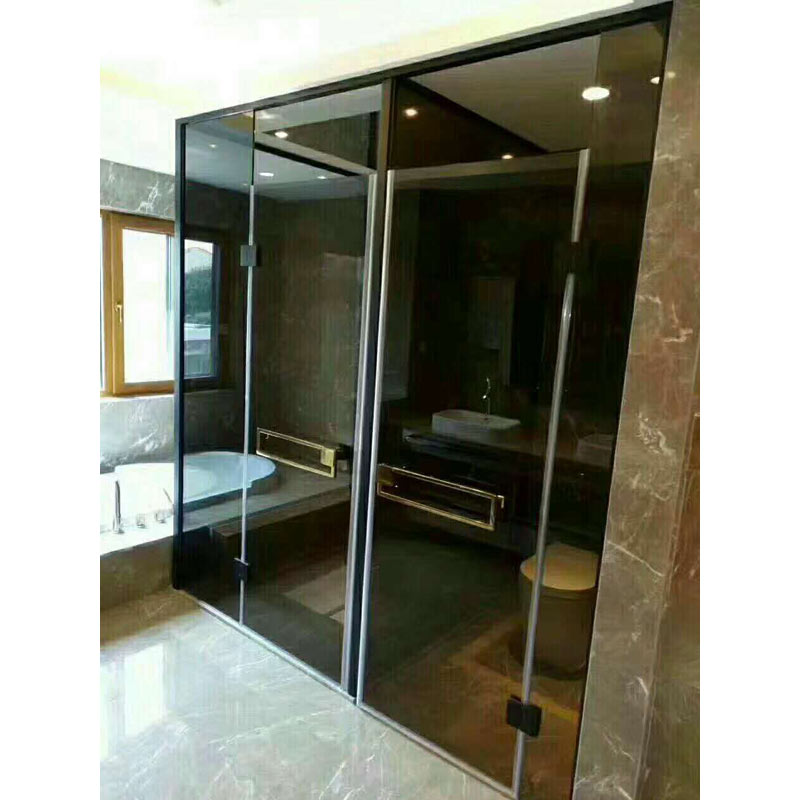
Step-by-Step: Specifying Shower Door Glass in Seven Steps
For buyers moving from evaluation into execution, the sequence below converts the option list into a locked specification before the purchase order is issued.
- Lock the enclosure platform first. Decide whether the project needs sliding shower doors, a hinged shower door, pivot shower doors, an arc or bypass shower door, a bathtub shower door or a fixed shower screen, and confirm the hardware substrate — aluminium alloy or 304 stainless steel. The platform determines the weight and geometry limits that the glass must respect.
- Assign a privacy target per bathroom type. A family bathroom, an ensuite, a guest bathroom and a hotel room do not need the same level of screening. Writing the privacy requirement down before looking at finishes prevents the common mistake of defaulting every unit to clear glass.
- Describe the maintenance reality, not the intention. State who will clean the enclosure, how often, and whether the project is in an area with hard water. This is what decides whether an easy-clean treatment should be standard across the order or reserved for high-use units.
- Confirm the destination market's safety glazing standard before quoting. US-bound projects should be checked against ANSI Z97.1-2026 and CPSC 16 CFR 1201; European projects against EN 12150. Compliance is an entry requirement, not a differentiator, so it belongs at the start of the specification rather than at the inspection stage.
- Decide whether the pane build-up must be laminated. If the project's risk profile calls for anti-shatter behavior, laminated glass is the option to specify — and it should be decided before the door hardware is selected, because the build-up affects the moving load.
- Match the visual finish to the design intent. Clear for openness, tinted for moderated transparency, flute for a decorative ribbed screen, chemically frosted for privacy with daylight. Confirm at this point whether a surface treatment such as easy-clean or film-coated is to be combined with the chosen finish, and define the film function if film-coated glass is requested.
- Validate on a sample, then lock acceptance criteria. Approve a physical sample of the exact combination, record it, and use it as the reference for the production run.
Commercial parameters to confirm at the same time. SHKL provides OEM production with customization of size, color, material, finish, hardware, logo and design style. The minimum order quantity is 50 units, monthly production capacity is 10,000 units, and the typical production lead time is 30–45 days. Standard purchasing terms are FOB delivery, T/T payment, and pre-shipment test as the acceptance criterion. Quality control follows 100% inspection standards, and after-sales support covers warranty support, remote after-sales consultation and spare parts supply. Export markets include North America, Europe, Oceania and the Middle East.
Use Cases: How Glass Choices Decide Real Projects
Australia — volume residential shower doors. A shower door customization client in Australia installed 190 units of the KL-AS5511312 sliding shower door, a 304 stainless steel platform, for bathroom shower applications. The products met Australian safety standards, installation ran smoothly, and customer satisfaction was high; the relationship has run between five and ten years, with the project highlight recorded as appropriate sizing and reliable product function. Read against this guide, the Australian project is an example of a specification where dimensional fit and function dominated, with safety glass compliance acting as a gate rather than a selling point.
Thailand — glass build-up as the deciding factor. A shower door customization client in Thailand installed 110 units of the same KL-AS5511312 platform for bathroom applications, but the recorded highlight is different: safety laminated glass with an anti-shatter design. The product met local safety standards, installation was smooth, and satisfaction was high. This project is the clearest illustration of the article's central argument — the door platform was identical to the Australian project, but the glass construction was the feature the project was specified around.
In both cases the client was buying a shower door, but the specification that carried the risk was the glass. Buyers evaluating a supplier at this stage should test the supplier's capability the same way: ask for two quotations on the same model with two different glass craftsmanship specifications, and check whether the supplier can describe the difference in build-up, not just in appearance.
Comparison Table: Choosing Glass Craftsmanship by Buyer Priority
| Glass craftsmanship option | Visual character | Privacy contribution | Maintenance profile | Typical fit |
|---|---|---|---|---|
| Clear glass | Fully transparent, maximum light | None | Water marks and soap film most visible; benefits from easy-clean | Small shower rooms and frameless shower door designs where the glass should visually disappear |
| Tinted glass | Darker tone, reduced transmission and glare | Moderate — detail is harder to read through the panel | Similar cleaning profile to clear glass; marks are less visually obvious | Bathroom shower doors in bright rooms and hotel bathrooms |
| Laminated glass | Matches the finish it is combined with | Depends on the combined finish | Matches the finish it is combined with | Projects where anti-shatter behavior is a requirement, such as family or hospitality bathrooms |
| Flute glass | Vertical ribbed texture, strong decorative pattern | High when viewed at an angle; light still passes | Ribbed profile needs deliberate cleaning attention | Design-led shower screens, shower cabins and boutique hospitality projects |
| Chemically frosted glass | Translucent, matte, diffuses light | High | Smooth chemical finish is generally easier to wipe than a blasted texture | Ensuite and shared bathrooms where privacy is the priority |
| Easy-clean | No change to glass appearance | None | Designed to reduce adhesion of water deposits and soap scum | High-use showers, hotel bathrooms and hard-water regions |
| Film-coated | Depends on the film function | Depends on the film specification | Depends on the film specification | Projects where the film function and acceptance criteria are defined in the RFQ |
FAQ: Shower Door Glass Craftsmanship Questions Buyers Ask
Which safety glass standards apply to shower doors in the US and Europe?
In the United States, safety glazing materials for shower doors must comply with ANSI Z97.1-2026 and CPSC 16 CFR 1201, which address impact and shatter behavior. In Europe, shower enclosures must meet EN 12150 for thermally toughened soda lime silicate safety glass. Buyers should confirm that the glass specified in their order is tested against the standard that applies in the destination market, and should request the corresponding documentation before mass production begins.
Can the same shower door model be supplied with different glass craftsmanship options?
Yes. In SHKL's shower door range, KL-AS5605110-5 (bathtub shower door, aluminium alloy hardware) and KL-AS001-1 (shower screen, 304 stainless steel hardware) both list clear glass, tinted glass, laminated glass, flute glass, chemically frosted glass, easy-clean and film-coated as glass craftsmanship options, as do KL-AS5577310, KL-AS5507310, KL-AS5608212, KL-AS5511312, KL-AS5210422 and KL-AS5104310. Glass craftsmanship is therefore a specification variable within a model rather than a fixed attribute of it.
What are the minimum order quantity, customization options and payment terms?
SHKL provides OEM production services with customization of size, color, material, finish, hardware, logo and design style. The minimum order quantity is 50 units, monthly production capacity is 10,000 units, and the typical production lead time is 30–45 days. Standard purchasing terms are FOB delivery, T/T payment, and pre-shipment test as the acceptance criterion.
How should a buyer validate a glass option before committing to mass production?
Validation should happen on a physical sample rather than on a rendering. Because laminated glass, flute glass and chemically frosted glass change the appearance, the privacy level and the cleaning behavior of the unit, the buyer should confirm the exact combination of visual finish, pane build-up and surface treatment on the sample and then record it as the acceptance criterion. SHKL applies 100% inspection to all units and uses pre-shipment test as the standard acceptance criterion, so the approved sample becomes the reference for the production run.
What lead time and after-sales support should buyers expect?
The typical production lead time is 30–45 days from a confirmed order, with a monthly production capacity of 10,000 units and 100% inspection before shipment. After-sales support includes warranty support, remote after-sales consultation and spare parts supply. Buyers who need to compare glass craftsmanship on a physical sample can request a sample or a quotation, review the full product range in the downloadable brochure, and confirm the exact glass specification for their project at www.shklbathroom.com.
Conclusion: A Repeatable Glass Specification Process
Glass craftsmanship is the part of a shower door specification that buyers most often leave to the supplier's default — and the part that is least reversible once the order is placed. The seven options in SHKL's shower door program are not competing alternatives so much as different answers to different project questions: clear glass protects openness, tinted glass moderates transparency, laminated glass changes what happens when glass breaks, flute and chemically frosted glass deliver privacy in two different visual languages, and easy-clean and film-coated glass address surface behavior rather than appearance.
The process that works is short enough to repeat on every project. Fix the platform and hardware substrate, set the privacy requirement per bathroom type, describe the maintenance reality, confirm the destination market's safety glazing standard, decide on the pane build-up, choose the visual finish, and validate the exact combination on a sample before production. Because the same seven options apply across KL-AS5605110-5, KL-AS001-1 and the rest of the range, the same specification logic travels from a single ensuite bathroom to a 190-unit residential rollout without changing the questions a buyer has to answer.
Next step: compare glass craftsmanship on a physical sample
Send your project requirements — enclosure type, glass finish, pane build-up, surface treatment and destination market — and the SHKL team will confirm the specification, the MOQ (50 units), the typical lead time (30–45 days) and the sample arrangement. Download the product brochure for the full shower door and bathroom range: SHKL product brochure (PDF). Further technical information is available at www.shklbathroom.com.