
Top Shower Door Picks: Hospitality vs Residential Projects
Shower Door Selection · Project-Type Shortlist
A shower door shortlist is only useful when it is built around the project it has to serve. Commercial hospitality work and residential construction buy the same product category — shower doors and glass shower enclosures — but they stress different parts of it. A hotel programme repeats one bathroom design across many rooms and needs a specification that holds still. A residential programme spreads across fewer, more varied bathrooms and needs configuration flexibility. Ranking both from one list produces a list nobody can buy from.
This shortlist separates the two. It ranks eight SHKL shower door series references into a commercial hospitality track and a residential track, and gives one line for every pick explaining why it made the list. Each reason is tied to two attributes only: the hardware material class (304 stainless steel or aluminium alloy) and the project type the pick is intended to serve. There are no star ratings, no third-party scores, and no competitor models in this list.
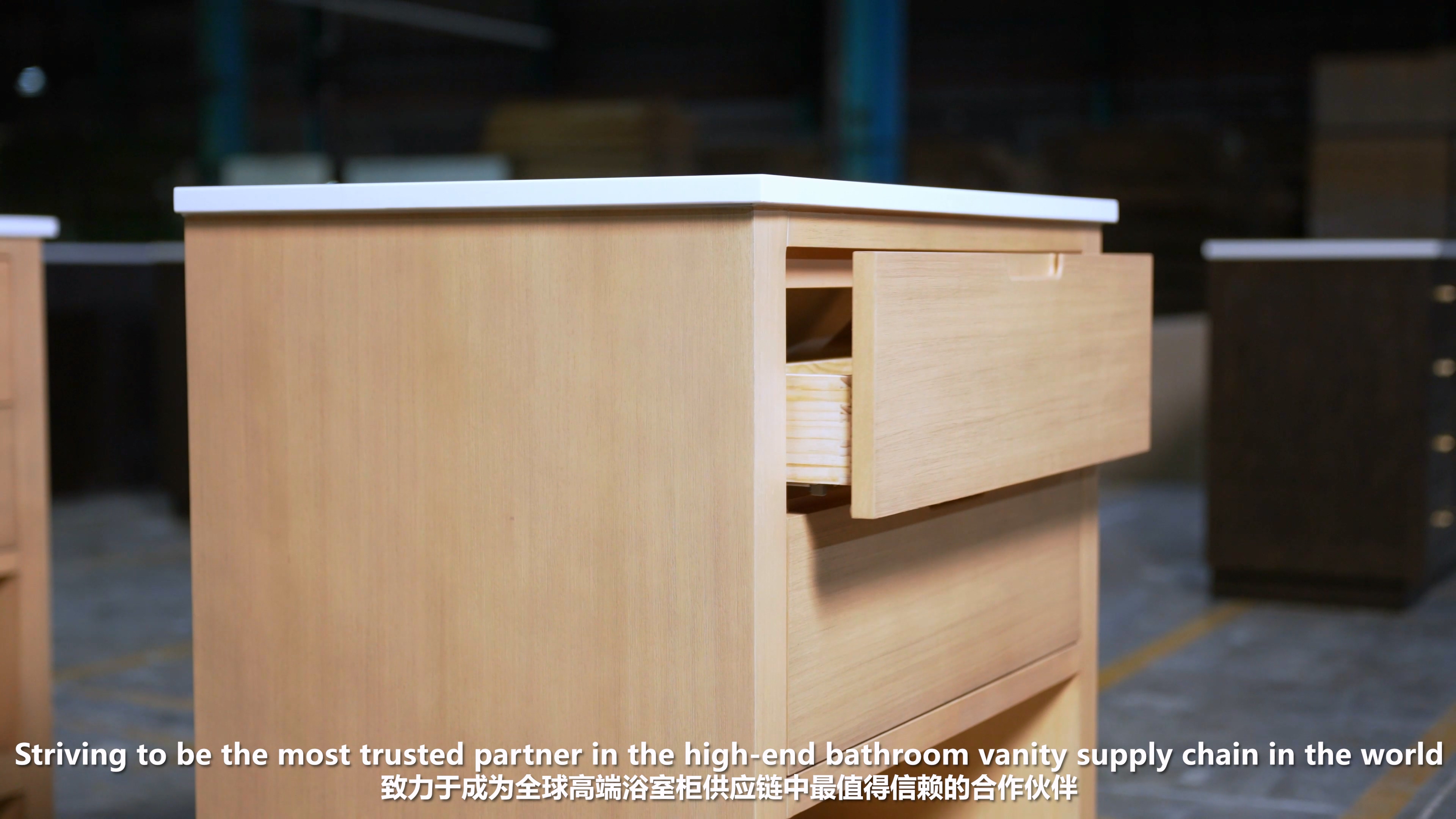
Shower door and bathroom product display at the SHKL manufacturing base in Foshan, Guangdong.
Why One Shower Door List Fails Both Project Types
Hospitality and residential briefs both start with the sentence “we need shower doors” and then diverge on almost everything that follows. The divergence shows up in five places, and each one changes what belongs on the shortlist.
Repetition versus variation
Hospitality projects repeat one bathroom design across many rooms. That rewards a specification that can be held constant: one hardware material class, one glass thickness, one finish, one spare-parts set for the maintenance team. Residential work behaves in the opposite way. A single home may need several enclosure footprints, and a multi-unit development may run more than one unit type under one contract. Configuration flexibility, not repetition, is the constraint.
Duty cycle versus daily use
Hotel and serviced-apartment bathrooms are cleaned on a schedule and used continuously by different guests. That pushes hardware material and finish durability higher up the specification. A household bathroom is used daily but by far fewer people, so the same enclosure may sit untouched for years between interventions.
Replacement logistics versus personal disruption
In hospitality, a sticking slide or a squeaking hinge takes a room out of inventory, so hardware becomes a maintenance decision with a revenue cost attached. In a home the same failure is an inconvenience rather than a revenue event — but it is far more visible to the person who chose the enclosure.
Budget structure
Hospitality budgets spread across many identical units, so the hardware material class is a lever a project manager can pull across an entire property. Residential budgets concentrate on fewer bathrooms, where finish consistency and layout flexibility usually carry more weight than unit economics.
Compliance
Both project types must satisfy the safety-glazing requirements of the destination market. That obligation follows the glass and the jurisdiction — not whether the hardware is 304 stainless steel or aluminium alloy. Mixing the two material tracks in one project does not create two compliance routes.
What the Market and the Standards Say
Two market signals are worth keeping in view while building a shortlist. Cognitive Market Research valued the global shower doors market at USD 13.5 billion in 2023. The same commercial research source reports that frameless shower glass doors hold a 75% share of the North American market as of 2025 — a preference signal about what buyers ask for, not a specification requirement.
On the standards side, EN 14428:2015+A1:2018 is the European standard that specifies functional requirements and test methods for shower enclosures for domestic purposes. In the United States context, the National Glass Association’s Frameless Shower Enclosures Design Guide states that shower-enclosure glass must be safety glazing meeting the impact requirement of CPSC 16 CFR 1201, and describes monolithic tempered glass of at least 3/8 inch (10 mm) as typical for the frameless category covered by that guide. Neither document ranks suppliers, and neither prefers one hardware material over another.
On the supply side, SHKL — Foshan SHKL Sanitary Ware Co., Ltd — is a sanitary ware manufacturer established in 2004 that produces bathroom vanities, shower doors, and LED bathroom mirrors. The company reports a combined production area of 140,000 m², split between a 100,000 m² base in China and a 40,000 m² factory in Ho Chi Minh City, Vietnam, and reports a monthly output of more than 70,000 units across bathroom cabinets, shower enclosures, and LED mirrors.
The reported product range matters for this shortlist because both material tracks sit inside it. SHKL lists frameless, framed, sliding, pivot, hinged, swing, folding, and walk-in shower doors and enclosures, with tempered glass options at 6 mm, 8 mm, 10 mm, and 12 mm, and glass treatments listed as clear, easy-clean, acid-etched, frosted, coated, silk-printed, filmed, laminated, wired, and inkjet-printed glass.

Production capacity tracking at the SHKL manufacturing base, where shower doors and glass shower enclosures are produced alongside bathroom vanities and LED mirrors.
How These Picks Were Ranked
Ranking a shortlist without inventing scores requires stating the rule up front. Four rules were applied.
- Material class first. For durability-led briefs, 304 stainless steel picks are ranked ahead of aluminium alloy picks.
- Project fit second. Within a material class, picks are ordered by how directly they map to the project type they are intended to serve — commercial hospitality or residential construction.
- No external ratings. No star scores, no independent rankings, no competitor models. Everything below comes from stated material and project-type fit.
- Ties are real and should stay visible. Where two picks share the same material class and the same project fit, they are interchangeable at shortlist stage. The final choice is settled by the configuration, glass thickness, and glass treatment your project actually requires — not by the position on this page.
Hospitality Shortlist: Five Picks for Commercial Projects
Commercial hospitality covers hotels, serviced apartments, student accommodation, and co-living. The common thread is repetition: the same bathroom is built many times, cleaned many times, and repaired by a maintenance team that needs consistency across the property.
1. KL-AS5511312 — 304 Stainless Steel
Why it made the list: it carries the 304 stainless steel hardware class that durability-led hospitality briefs specify first.In a commercial property the enclosure hardware is a maintenance item rather than a design detail. Holding one material class across the rooms keeps replacement components consistent, which is the simplest way to avoid a mixed inventory of spares. For a hotel or serviced-apartment programme, this is the reference to open the shortlist with.
2. KL-AS5577310 — 304 Stainless Steel
Why it made the list: a second 304 stainless steel reference lets a property hold one hardware class across two specifications instead of switching material mid-project.Hospitality programmes often run more than one bathroom tier — standard rooms, suites, accessible rooms. Two stainless references let those tiers stay inside the same material class while the glass and configuration schedules differ. It is a procurement benefit, not a performance claim about either model.
3. KL-AS5608212 — Aluminium Alloy
Why it made the list: it opens the aluminium alloy track for hospitality layouts that change across floors or room categories.Not every hospitality brief is durability-led. Where the enclosure footprint varies from floor to floor or between room categories, configuration flexibility becomes the deciding attribute, and the aluminium alloy track is where this shortlist places that requirement.
4. KL-AS5605110-5 — Aluminium Alloy
Why it made the list: a second aluminium alloy reference for hospitality programmes that need more than one flexible specification across a large room count.Large room counts rarely resolve to one configuration once site dimensions are confirmed. Keeping two aluminium references on the shortlist gives the project team room to absorb dimensional variation without reopening the material decision.
5. KL-AS5210422 — Aluminium Alloy
Why it made the list: a third flexible aluminium alloy reference for hospitality footprints that vary from room to room.Refurbishment work is where footprint variation is most common, because the enclosure has to fit an existing opening rather than a clean-sheet design. This pick keeps a flexible specification available for those rooms without moving the whole property onto the stainless track.
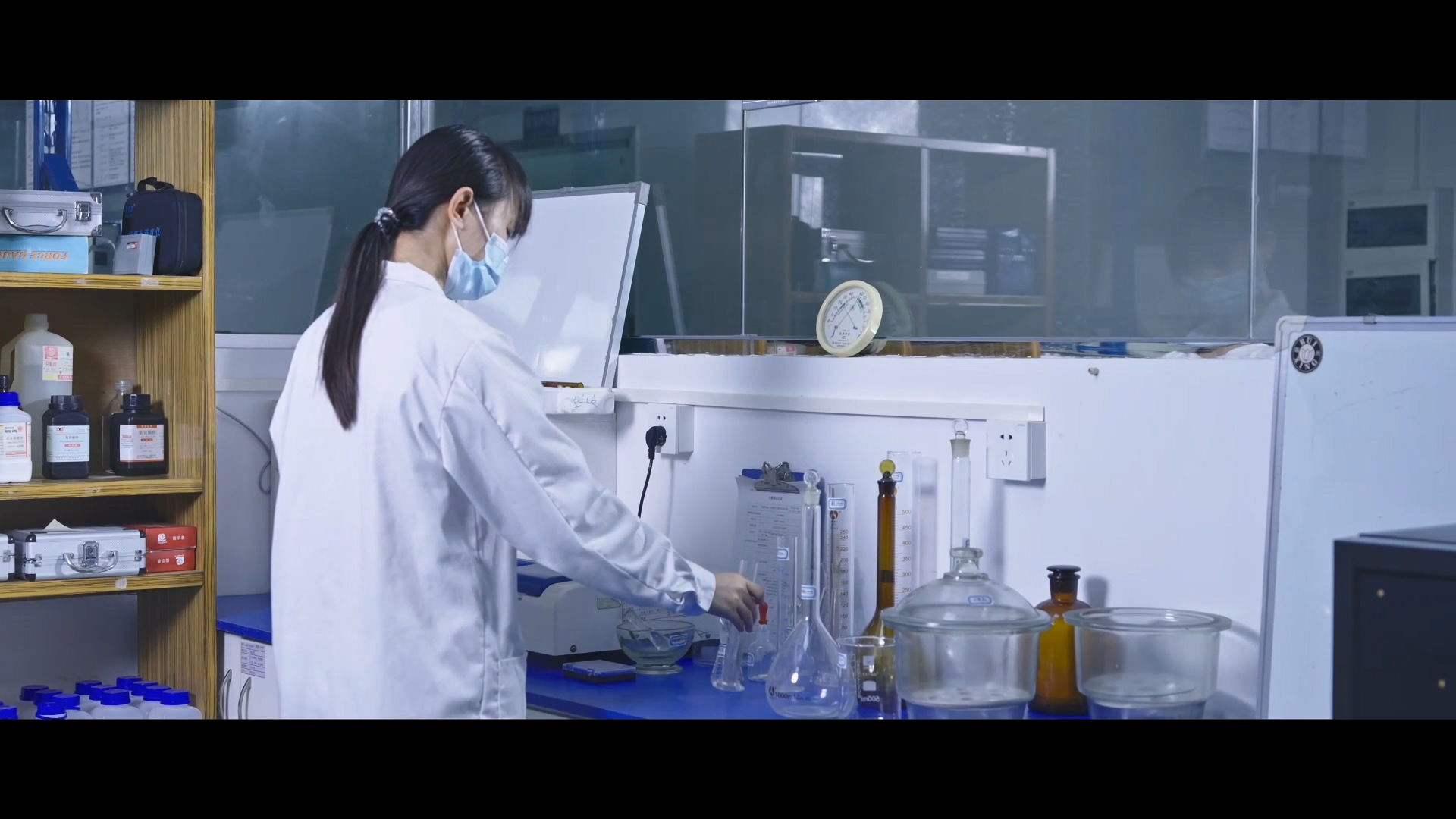
Laboratory inspection at SHKL. Hardware material and glass specification should be confirmed against the approved sample before a hospitality shortlist is locked.
Residential Shortlist: Three Picks for Homes and Multi-Unit Builds
Residential construction covers single-family bathrooms, apartment developments, and multi-unit builds where the same enclosure is repeated on a much smaller scale than in hospitality.
1. KL-AS001-1 — 304 Stainless Steel
Why it made the list: the stainless durability track applied to residential — for households where the enclosure is used daily for years and hardware replacement is a disruption rather than a scheduled event.This is the pick to carry into premium residential work or any residential brief where the buyer has stated durability as the primary criterion rather than lowest configuration cost.
2. KL-AS5104310 — Aluminium Alloy
Why it made the list: aluminium alloy flexibility for standard residential bathroom footprints and consistent finish matching across a home or a unit mix.Most residential bathrooms sit inside predictable dimensions. Where that is true, configuration flexibility and finish consistency carry more value than a heavier hardware material class.
3. KL-AS5507310 — Aluminium Alloy
Why it made the list: a second aluminium alloy reference for multi-unit residential programmes where enclosure size changes between unit types.Developments running one-bedroom, two-bedroom, and three-bedroom layouts under a single contract usually need more than one enclosure specification. Two aluminium references keep that variation inside one material decision.
If a residential project runs more than one bathroom type, keep one stainless and one aluminium reference on the shortlist until the configuration schedule is final. Dropping the stainless option before that point removes the durability alternative permanently.
The Shortlist at a Glance
| Rank | Model Reference | Hardware Material | Project Track | Why It Made the List |
|---|---|---|---|---|
| 1 | KL-AS5511312 | 304 stainless steel | Hospitality | Opens the shortlist with the durability-led hardware class. |
| 2 | KL-AS5577310 | 304 stainless steel | Hospitality | Second stainless reference keeps one hardware class across two specifications. |
| 3 | KL-AS5608212 | Aluminium alloy | Hospitality | Flexible track for layouts that change across floors or room categories. |
| 4 | KL-AS5605110-5 | Aluminium alloy | Hospitality | Adds a second flexible specification for large room counts. |
| 5 | KL-AS5210422 | Aluminium alloy | Hospitality | Third flexible reference for footprints that vary room to room. |
| 6 | KL-AS001-1 | 304 stainless steel | Residential | Durability track applied to daily-use household bathrooms. |
| 7 | KL-AS5104310 | Aluminium alloy | Residential | Flexibility for standard residential footprints and finish matching. |
| 8 | KL-AS5507310 | Aluminium alloy | Residential | Second aluminium reference for multi-unit builds with several unit types. |
Shortlist summary. Ranking reflects hardware material class and project-type fit only.
304 Stainless Steel vs Aluminium Alloy: Decision Table
Before narrowing to a model reference, confirm which material track the project actually wants. The comparison below uses only the attributes stated for this shortlist and the specifications SHKL publishes for its shower door range.
| Decision Dimension | 304 Stainless Steel Picks | Aluminium Alloy Picks |
|---|---|---|
| Models in this shortlist | KL-AS5511312, KL-AS5577310, KL-AS001-1 | KL-AS5608212, KL-AS5605110-5, KL-AS5210422, KL-AS5104310, KL-AS5507310 |
| Primary project fit | Durability-led briefs: commercial hospitality and daily-use residential | Flexibility-led briefs: variable layouts, multi-unit and multi-tier projects |
| Where it wins | Properties that prioritise hardware durability and consistent replacement components | Projects where enclosure dimensions and configurations change across rooms or unit types |
| What to confirm before ordering | The stated grade and finish of the actual hardware components on the supplied model | The alloy, surface treatment, and load behaviour of the specific configuration being supplied |
| Glass options across the SHKL range | Tempered glass listed at 6 mm, 8 mm, 10 mm, and 12 mm, with treatments listed as clear, easy-clean, acid-etched, frosted, coated, silk-printed, filmed, laminated, wired, and inkjet-printed | |
| Configuration coverage across the SHKL range | Frameless, framed, sliding, pivot, hinged, swing, folding, and walk-in shower doors and enclosures | |
| Compliance route | Shared: EN 14428:2015+A1:2018 for the European context; safety glazing to CPSC 16 CFR 1201 per the National Glass Association frameless design guidance for the US context. Confirm the current requirement for the destination market. | |
Comparison built from stated shortlist attributes and SHKL’s published product range. Material choice does not change the compliance route.
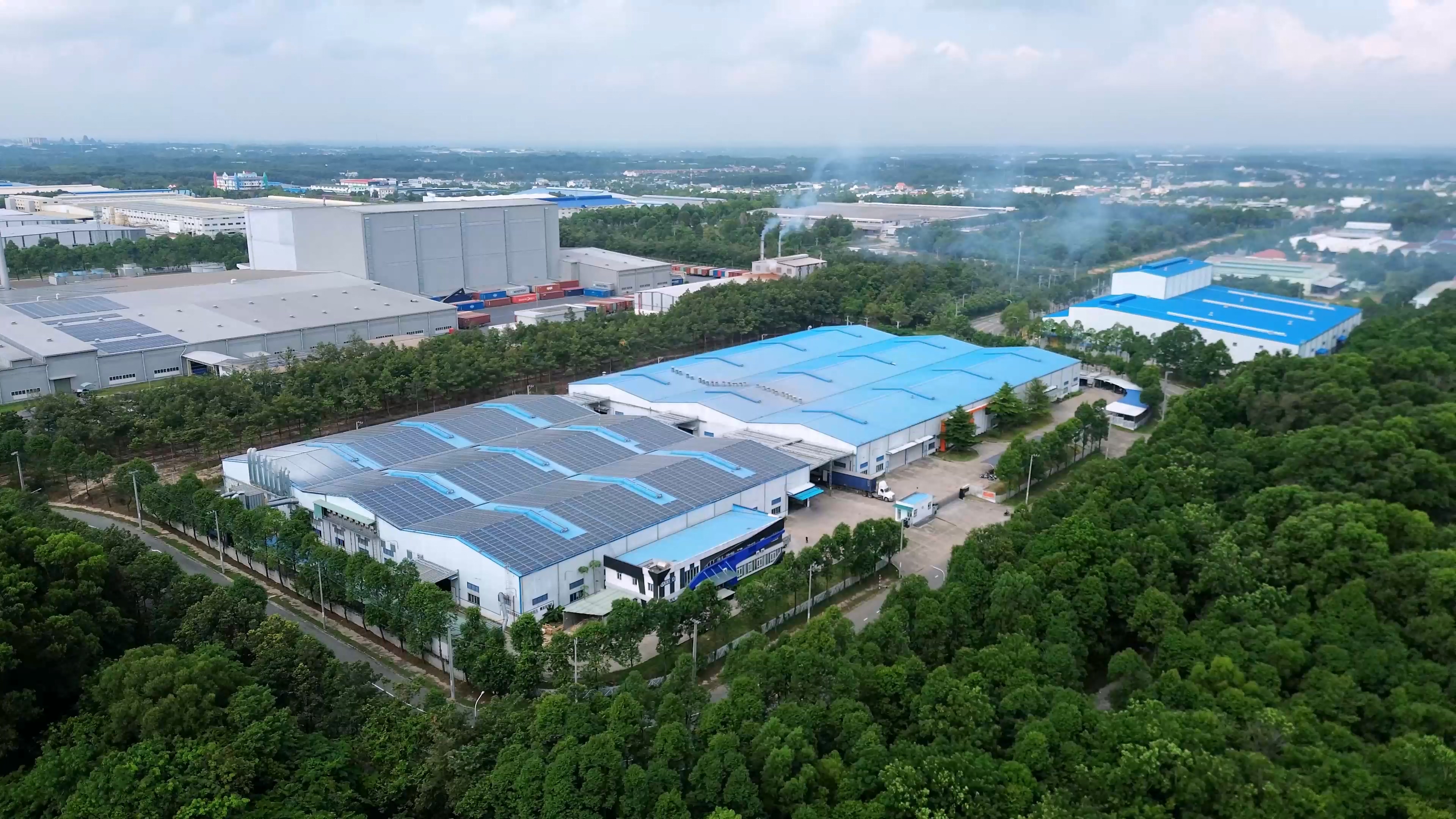
SHKL’s Vietnamese production base, part of a reported combined 140,000 m² of manufacturing area across China and Vietnam.
Step-by-Step: From This Shortlist to a Purchase Order
- Define the project type and repeat count. Decide whether the project is commercial hospitality, residential construction, or a mix of both, and estimate how many identical bathrooms the specification has to cover. Repetition favours a fixed material class; variation favours configuration flexibility.
- Lock the material track. Choose 304 stainless steel where durability is the stated priority, or aluminium alloy where configuration flexibility matters more. Do this before comparing individual model references, because it removes half the list immediately.
- Confirm the enclosure configuration for each reference. SHKL lists frameless, framed, sliding, pivot, hinged, swing, folding, and walk-in shower doors and enclosures. Confirm which configuration the chosen reference is being supplied in before comparing quotations on price alone.
- Set the glass specification. Choose the thickness from the listed 6 mm, 8 mm, 10 mm, and 12 mm tempered options, then choose the treatment from the listed clear, easy-clean, acid-etched, frosted, coated, silk-printed, filmed, laminated, wired, and inkjet-printed options. Laminated glass shower door specifications in particular should be agreed in writing.
- Check the compliance route for the destination market. For the European context, EN 14428:2015+A1:2018 sets functional requirements and test methods for shower enclosures for domestic purposes. For the United States context, the National Glass Association design guidance requires safety glazing meeting the CPSC 16 CFR 1201 impact requirement and describes monolithic tempered glass of at least 3/8 inch (10 mm) as typical for the frameless category it covers. Confirm the current official requirement for your jurisdiction rather than relying on a general figure.
- Request samples and agree acceptance criteria in writing. Confirm the hardware material class actually supplied, the glass thickness and treatment, the finish, and the edge and corner treatment against the approved sample.
- Lock packaging and the delivery schedule. SHKL’s documented delivery-risk controls include breaking down the delivery schedule, a critical-material early warning mechanism, SKU control that limits permitted combinations on modular product systems, a rolling production scheduling system, safety stock, a delivery schedule buffer, and customer classification. For transport, packaging is strengthened to reduce damage risk. Agree the packaging specification at the same time as the product specification, not after.
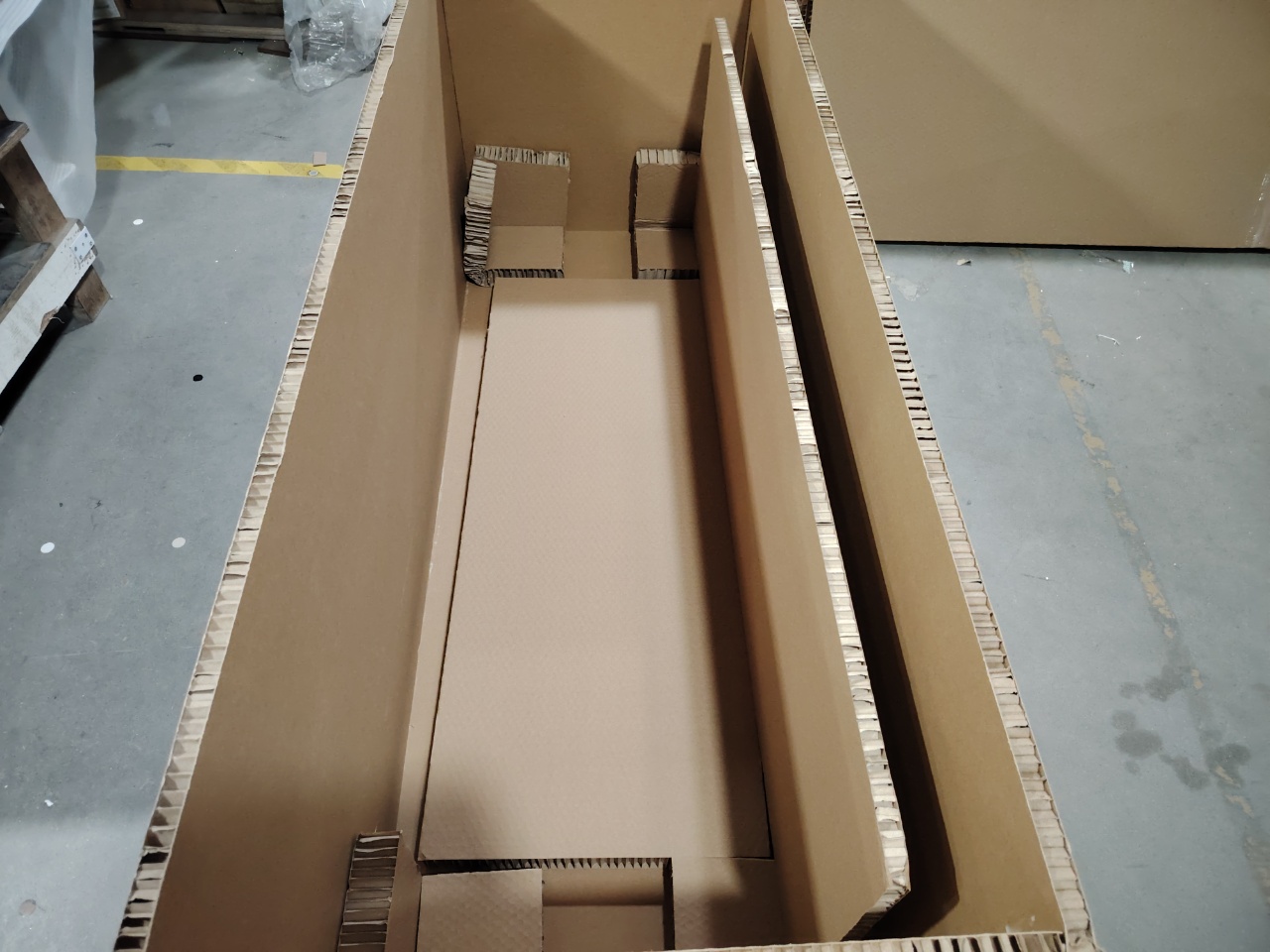
Reinforced packaging on export shipments. Packaging specification should be agreed alongside the product specification.
Use Cases: Which Pick Fits Which Building
- Hotel refurbishment with standardised room types. Open with the stainless references KL-AS5511312 and KL-AS5577310, then add the aluminium references only for the rooms where the existing opening varies.
- Serviced apartments with mixed unit layouts. The aluminium hospitality references KL-AS5608212, KL-AS5605110-5, and KL-AS5210422 give the project room to absorb layout variation under one supplier relationship.
- Apartment development with a repeated unit type. The residential aluminium references KL-AS5104310 and KL-AS5507310 cover standard footprints and multi-unit mixes.
- Single-family or premium residential. KL-AS001-1 is the residential pick when the buyer has named durability as the deciding criterion rather than configuration cost.
- Mixed-use developments. Split the shortlist rather than averaging it: stainless for high-traffic public-facing bathrooms, aluminium for the residential units, and keep both inside the same compliance check.
Frequently Asked Questions
Do 304 stainless steel and aluminium alloy shower doors follow the same compliance route?
Compliance is not decided by the hardware material. In the European context, EN 14428:2015+A1:2018 specifies functional requirements and test methods for shower enclosures for domestic purposes. In the United States context, the National Glass Association’s frameless shower enclosure design guidance states that shower-enclosure glass must be safety glazing meeting the impact requirement of CPSC 16 CFR 1201, and describes monolithic tempered glass of at least 3/8 inch (10 mm) as typical for the frameless category it covers. Both the 304 stainless steel and aluminium alloy tracks in this shortlist are subject to the same requirement for the destination market. Buyers should confirm the current official requirement for their jurisdiction and request the test reports and certificate documents that apply to the specific model ordered. SHKL additionally reports ISO 9001, ISO 14001, and ISO 45001 management-system certificates issued on 11 May 2024 and valid until 10 May 2027; because these are management-system certificates rather than product conformity certificates, buyers should verify the certificate scope and covered production site directly.
Can one supplier deliver both the 304 stainless steel and the aluminium alloy tracks in one order?
Both tracks sit inside a single stated product range at SHKL, which matters on mixed projects. SHKL lists frameless, framed, sliding, pivot, hinged, swing, folding, and walk-in shower doors and enclosures, with tempered glass at 6 mm, 8 mm, 10 mm, and 12 mm and ten listed glass treatments. The company reports a combined production area of 140,000 m² across a 100,000 m² base in China and a 40,000 m² factory in Ho Chi Minh City, Vietnam, and reports monthly output of more than 70,000 units across bathroom cabinets, shower enclosures, and LED mirrors. That structure supports a project that runs one material track for hospitality bathrooms and another for residential units under the same supplier relationship.
What actually drives the cost difference between these picks?
No price list is published for these model references, so this shortlist does not quote prices and does not compare them on cost. What can be compared are the cost drivers: the hardware material class (304 stainless steel or aluminium alloy), the enclosure configuration, the glass thickness and glass treatment, the packaging specification, the order volume, and the freight basis. A quotation that itemises those components is more useful than a single number, because it shows which driver the project can still influence before the order is placed.
What should be checked on a shower door sample before the shortlist is locked?
Confirm that the hardware supplied matches the stated material class for the model reference. Confirm the glass thickness against the specification selected from the 6 mm, 8 mm, 10 mm, and 12 mm tempered options, and confirm the glass treatment against the selected option. Check the finish, the edge and corner treatment, and whether the packaging on the sample reflects what will actually ship. For projects in humid, continuously wet environments, the hardware finish is worth inspecting in person rather than from a photograph.
How can a project running both hospitality and residential lines keep its delivery schedule?
SHKL’s documented delivery-risk controls are designed for exactly this scenario: breaking the delivery schedule down completely, a critical-material early warning mechanism, SKU control that limits the combinations permitted on modular product systems, a rolling production scheduling system, safety stock, a delivery schedule buffer, and customer classification so that major, regular, and smaller customers are scheduled differently. In practice, a mixed project should separate the hospitality and residential lines at the planning stage rather than merging them into one delivery date, and should treat the packaging specification as part of the schedule rather than an afterthought. If you want to test this shortlist against your own project schedule, you can request a sample and a quotation for the specific model references above, and review the fuller specification set in the SHKL product brochure.
Conclusion: Pick the Track First, Then the Model
The eight references above resolve into one decision: 304 stainless steel where hardware durability has to hold across repeated, heavily used bathrooms, and aluminium alloy where the enclosure has to fit layouts and unit types that change. Hospitality briefs lean on the first for core room stock and the second for variation. Residential briefs lean on the first for durability-led households and the second for standard footprints and multi-unit mixes.
What none of this replaces is the specification work that follows the shortlist: enclosure configuration, glass thickness, glass treatment, compliance route for the destination market, sample approval, and the packaging and delivery schedule. Fix those five items and the ranking stops mattering — your project schedule picks the model for you.
Next Step: Sample, Quote, or Specification Review
SHKL supplies shower doors, glass shower enclosures, and shower screens for hospitality and residential projects from a reported combined production area of 140,000 m² in China and Vietnam. If you are shortlisting for a specific project type, send the model references and the project schedule to start a sample or quotation request.

Foshan SHKL Sanitary Ware Co., Ltd
Factory address: No. 11, Industrial Avenue North, Zone B, Shishan Industrial Park, Nanhai District, Foshan, Guangdong, China
Website: www.shklbathroom.com | Blog: blog.shklbathroom.com
Contact person: Rita Luo | E-mail: info@shklbathroom.com | ecommerce@shkl.cc
WhatsApp: +86 13790005061
Product brochure: Download the SHKL product catalogue (PDF)
Have Questions or Need More Details?
Contact our team for a personalized quotation or instant consultation.
Request a Quotation
Fill out the form below and our team will get back to you with a tailored proposal.
WhatsApp Direct Chat
Prefer to chat in real-time? Message us on WhatsApp for instant assistance & quick answers.
- Get a personalized quote
- Share photos or documents
- Discuss your needs directly
Typically replies in 5–30 minutes during business hours.