How to Decode Shower Door Technical Specifications and Understand How Manufacturing Processes Affect Quality
For global procurement professionals, sourcing a shower door is rarely about just picking a model. The real challenge lies in interpreting technical data sheets, understanding how material choices and production methods directly translate into product performance, and avoiding costly failures. This guide explains how to read specifications like a factory expert and identify the manufacturing processes that separate durable, compliant enclosures from problematic ones.
Why Technical Specs and Manufacturing Processes Matter More Than You Think
A glass shower enclosure must withstand daily thermal shock, moisture, and mechanical stress. Specifications such as glass thickness, coating type, and hardware material are not just marketing features—they determine safety, longevity, and user satisfaction. Equally important is how these materials are transformed: a supplier’s manufacturing process—from glass cutting and edge finishing to frame assembly and quality inspection—dictates whether the final product meets international standards and your project’s specific requirements.
Common buyer concerns include glass shattering, hinge corrosion, sliding mechanisms jamming, and water leakage. All these issues can be traced back to overlooked technical parameters or poor process control. The following sections break down each critical aspect.
Industry Background: From Raw Glass to Finished Shower Screen
Modern shower doors are part of a sophisticated supply chain involving glass processors, metal fabricators, and assembly specialists. Leading manufacturers like Foshan SHKL Sanitary Ware Co., Ltd (SHKL) have vertical integration—starting from raw material procurement to final packaging. SHKL operates a 100,000 m² intelligent base in China and a 40,000 m² factory in Vietnam, achieving a monthly output of 70,000+ units. Such scale ensures consistent quality and the ability to adopt advanced processes (e.g., automated spraying lines, CNC machining) that smaller shops cannot afford.
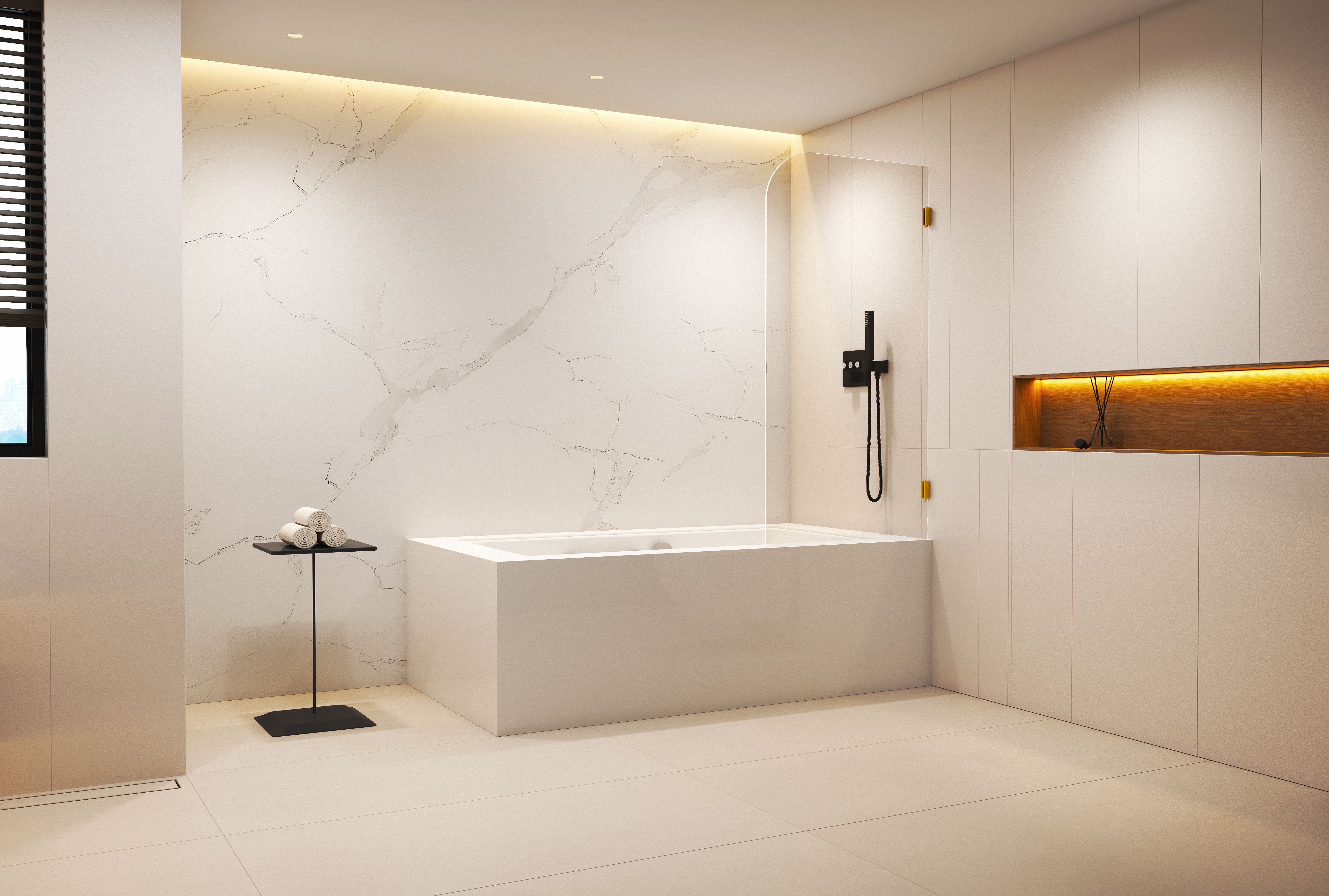
Detailed Solution: A Step-by-Step Approach to Reading Technical Documents and Auditing Production
Step 1 – Glass Type & Craftsmanship Options
The glass is the heart of any frameless shower door. Standard parameters include thickness (typically 6mm, 8mm, or 10mm) and glass craftsmanship. SHKL offers the following options:
| Option | Benefit | Typical Use |
|---|---|---|
| Clear Glass | Maximum transparency | Modern minimalist bathrooms |
| Tinted Glass | Privacy, glare reduction | Hotels, commercial showers |
| Laminated Glass | Safety – holds together if broken | High-traffic areas, child safety |
| Flute Glass | Textured surface for privacy | Spa environments |
| Chemically Frosted Glass | Uniform matte finish, durable | Luxury residential |
| Easy-clean / Film-coated | Hydrophobic layer reduces water spots | Households, low-maintenance |
Why it matters: Tempered safety glass is mandatory for shower doors in most markets (e.g., ISO 45001 certified factories ensure proper tempering). Laminated glass adds a layer of polyvinyl butyral (PVB) that prevents shattering—critical for countries like Thailand where SHKL successfully delivered 110 units with laminated glass for anti-shatter design.
Step 2 – Hardware Materials: 304 Stainless Steel vs. Aluminum Alloy
Hinges, handles, and rails are exposed to constant humidity. Two common materials dominate:
- 304 Stainless Steel – Excellent corrosion resistance, ideal for coastal or high-humidity areas. Used in SHKL hinge shower doors like model KL-AS5577310.
- Aluminum Alloy – Lightweight, cost-effective, and available in various finishes. Common in sliding shower doors (e.g., SHKL model KL-AS5608212).
When evaluating suppliers, demand material certificates (e.g., ISO 9001 certified raw material sourcing). Check if the supplier uses laser positioning hole-making machines for precise hardware mounting—SHKL’s factory images show such equipment, which minimizes assembly errors.
Step 3 – Frame vs. Frameless: Different Design, Different Process
Frameless shower doors rely on thick glass (usually 8-10mm) and minimal metal clips. The absence of a frame means precision in glass edge finishing and hinge alignment is paramount. SHKL’s frameless models (KL-AS5104310) use aluminum alloy hardware and can accommodate multiple glass craftsmanship options. Framed shower screens are more forgiving for wall irregularities but require robust frame extrusion and corner connectors. Both types benefit from automated cutting and drilling to achieve tight tolerances.
Step 4 – Manufacturing Processes That Guarantee Quality
A reliable supplier should demonstrate:
- Advanced Cutting & Drilling – CNC machines ensure consistent hole positioning (photo: SHKL’s cutting machine and drilling machine).
- Edge Sealing – Proper edge polishing prevents micro-cracks that cause spontaneous glass breakage. SHKL uses dedicated edge sealing machines.
- Spray Painting & Coating – A dust-free spray booth workshop with automated lines (SHKL has Vietnam’s largest PU dust-free spray paint workshop) provides uniform surface finish on frames.
- Quality Control Lab – Regular testing for strength, salt spray resistance, and dimensional accuracy. SHKL’s QC laboratory conducts 100% inspection on critical parameters.
- Packaging & Transport Protection – Strong packaging (corner protectors, foam) reduces damage risk, as seen in SHKL’s packaging photos.
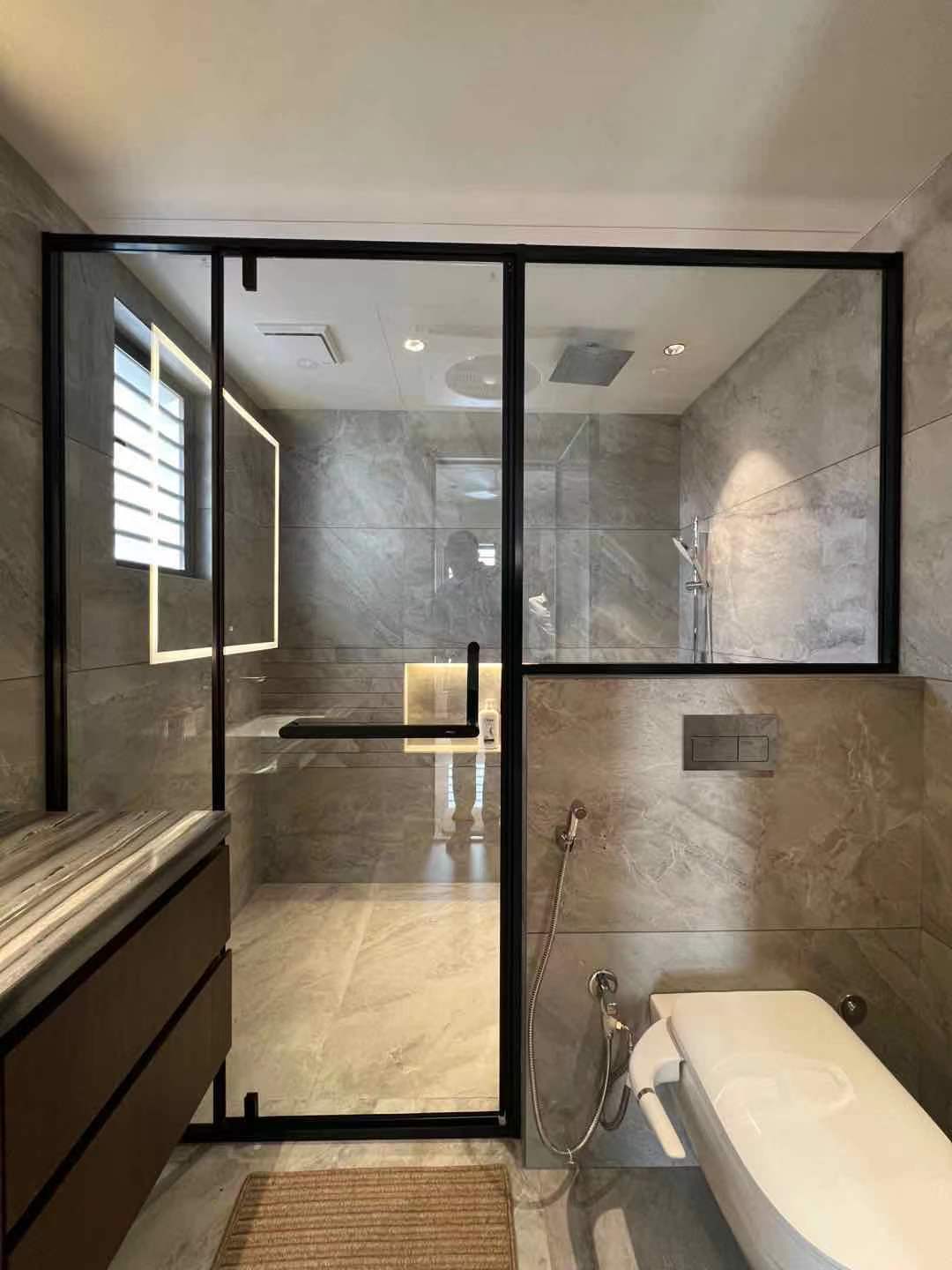
Step 5 – Certifications as Process Evidence
Certifications are not just paperwork—they prove process control. Look for:
- ISO 9001:2015 (Quality management – SHKL cert. 04924Q00629R0M)
- ISO 14001:2015 (Environmental management – cert. 04924E00351R0M)
- ISO 45001:2018 (Occupational health & safety – cert. 04924S00316R0M)
These third-party audits (conducted by Guangdong Quality Testing CTC Certification Co., Ltd.) cover R&D, manufacturing, and quality control processes.
Real-World Case Studies: How Specifications and Process Impact Outcomes
Case 1: Australia – Safety and Size Precision
SHKL supplied 190 units of custom shower doors (including hinge and sliding models) for an Australian project. The client required compliance with Australian safety standards. Using 304 stainless steel hardware and easy-clean coated glass, the product passed all local tests. The highlight: “The size is appropriate and the product functions well.” This outcome was possible because SHKL’s laser positioning and CNC cutting ensured tight tolerances.
Case 2: Thailand – Laminated Glass for Safety
A Thai buyer ordered 110 units of shower screens with laminated glass to minimize shatter risk. SHKL’s ability to provide laminated glass with PVB interlayer (option in their craftsmanship list) met local safety regulations. The result: “Safety glass meets local standards, smooth installation, high customer satisfaction.” The anti-shatter design was directly linked to the manufacturing process of laminating glass under heat and pressure.
Frequently Asked Questions (FAQ)
Q: What is the difference between tempered and laminated glass for shower doors?
A: Tempered glass is heat-treated for strength and shatters into blunt pieces. Laminated glass has a plastic layer between two glass sheets; even if broken, it stays in place. Both are safety glasses, but laminated is preferred where shatter containment is critical (e.g., public spaces).
Q: How does manufacturing process affect water leakage in sliding shower doors?
A: Leakage often results from poor frame assembly or incorrect glass offset. A supplier using CNC drilling, precise rail leveling, and quality seal gaskets (all verified during factory audits) will minimize gaps. SHKL uses 100% inspection to check door alignment.
Q: Which hardware material should I choose for a coastal hotel project?
A: 304 stainless steel is recommended for its superior corrosion resistance in salt air. Many SHKL models offer this option, such as the hinge door KL-AS5577310 and sliding door KL-AS5511312.
Q: How can I verify a supplier’s production capabilities before ordering?
A: Request factory photos or videos (like SHKL’s CNC machines, spray booths, QC lab). Ask for certificates (ISO 9001, etc.) and a sample of the proposed glass craftsmanship. Check if they have a dedicated laminated glass production line if you need that option. Also review their corporate brochure for detailed production info.
Conclusion: Choosing a Supplier Who Masters Both Specs and Process
Decoding technical specifications is only half the battle; understanding how a supplier manufactures the product ensures that the specs are actually met. SHKL (Foshan SHKL Sanitary Ware Co., Ltd) exemplifies a manufacturer that integrates smart factory technology, quality certifications, and a broad product range (from sliding doors to arc enclosures). For procurement professionals, the key takeaway is:
- Always demand detailed technical sheets with glass and hardware options.
- Audit the production line—look for CNC, automated spraying, and QC lab.
- Verify certifications and case studies that match your market.
- Use the SHKL brochure (download below) as a reference to compare capabilities.
By focusing on both technology and manufacturing process, you reduce risk, ensure compliance, and deliver a bathroom experience that lasts.
📥 Download the SHKL Company Brochure – Click here to access the full catalog, production details, and quality certifications.