
Supplier Red Flags: Reading Shower Door Capability from Model Range and Hardware

Capability claims should trace back to a physical site and a defined product range, not to a brochure adjective.
A shower door supplier's capability is largely visible before a factory audit, in two places: how many enclosure configurations it publishes with their own model numbers, and how deliberately it specifies hardware and glass. A supplier that builds a single configuration family and calls its fittings 'stainless steel' is not automatically a poor partner, but every gap in the published range tells a buyer exactly what to verify next.
This article sets out a pre-audit screen for buyers who are already at evaluation stage. It uses three observable signals, model-range breadth, hardware specification and glass-option depth, plus one scope test, coordinated bathroom supply. It assumes you already know what a frameless shower door is. The question here is narrower and more useful: can this specific supplier build the shower enclosure your project actually specifies?
The Verification Gap: Why Every Shower Door Supplier Sounds the Same
At quotation stage, most suppliers answer with the same four sentences: professional manufacturer, high quality, competitive price, OEM available. None of those statements can be checked in a 30-minute call, and any of them can be true or false without consequence to the supplier.
The result is a shortlist built on price and responsiveness rather than capability, and the problems surface later: a sliding shower door that reuses fittings from a lighter screen, a panel described as tempered glass with no documented thickness, a laminated glass shower door that appears in the catalogue but not on the line, a spare-part request that goes unanswered twelve months after delivery.
Six red flags appear repeatedly in shower door sourcing, and every one of them is observable from documents you already have:
- One product photograph reused across frameless shower doors, sliding shower doors, hinged shower doors and bath shower screens, with no model numbers attached.
- Hardware described only as stainless steel or aluminium, with no grade, no finish and no mapping to configuration.
- Glass described only as tempered, with no thickness options and no treatment options.
- A 100% quality guarantee with no inspection process behind the sentence.
- Certification logos displayed without a certificate number, issuer or expiry date.
- MOQ and lead time supplied only after you send a drawing, never as a standing term.
None of these prove the supplier is weak. All of them shift a verification cost onto you, and at evaluation stage that cost is the entire decision: you are not choosing between good and bad factories, you are choosing between suppliers whose statements you can test and suppliers whose statements you cannot.
What the Category Now Requires: Configuration Depth as a Market-Access Signal
Two pressures have made configuration breadth a genuine capability indicator rather than a catalogue vanity. The first is demand. The global shower doors market was valued at USD 13.5 billion in 2023 (Cognitive Market Research), and frameless glass doors are reported to hold a 75% share of the North American market as of 2025. That preference pushes suppliers toward heavier tempered panels, structural hardware and tighter installation tolerances.
The second is regulation. In Europe, EN 14428:2015+A1:2018 sets the functional requirements and test methods for domestic shower enclosures. In the United States, the National Glass Association design guide for frameless shower enclosures states that shower-enclosure glass should be safety glazing meeting the impact requirement of CPSC 16 CFR 1201, and describes monolithic tempered glass of at least 3/8 inch (10 mm) for the frameless category it covers. ASTM C1048-18 supplies the underlying specification for heat-strengthened and fully tempered flat glass.
A supplier serving several of those markets has to hold several configurations at once: a frameless shower door for one specification, a sliding shower door for a hotel refurbishment, a bath shower screen for a renovation package, a fixed shower screen for a compact shower room. Configuration depth is therefore a proxy for the number of production changeovers a factory already handles. It is a proxy, not a proof, and it is the first thing worth reading.
The Three Signals and One Scope Test
Signal 1: Model-Range Breadth, Six Families and Six Sets of Fixtures
Foshan SHKL Sanitary Ware Co., Ltd, known as SHKL, is a manufacturer of bathroom vanities, shower doors and LED bathroom mirrors established in 2004. Its published shower door range separates configuration families by model number: frameless (KL-AS5104310 and KL-AS5577310), sliding (KL-AS5608212 and KL-AS5511312), hinged (KL-AS5507310), arc (KL-AS5210422), bathtub (KL-AS5605110-5) and a fixed shower screen (KL-AS001-1). The same catalogue lists framed, pivot, swing, folding and walk-in configurations.
Each of those families is a different production problem, not a cosmetic variant. A frameless shower door carries its load through structural fittings rather than a frame. A sliding shower door depends on track, roller and guide systems plus bypass alignment. An arc enclosure requires curved glass. A bath shower screen has to seal against a bath rim at a different height and angle. A fixed shower screen is a panel-and-bracket problem with no movement at all. A supplier can be excellent at one of these and untested at the others.
Read the range as a checklist against your own specification, not as a scoreboard. If your project needs a hinged shower door and the catalogue shows only sliding systems, then 'we can customize' is a claim about tooling you cannot see. If a supplier shows eight families but every page carries the same three photographs, ask for one model number and one dimensioned drawing per family. Breadth without individual model identities is layout, not capability.
Signal 2: Hardware Specification, 304 Stainless Steel or Aluminium Alloy
Hardware is where quotation language is most often vague and where service life is most often decided. Two material families dominate: 304 stainless steel and aluminium alloy. They are not interchangeable options at the same price point, and a supplier that treats them as interchangeable is telling you something about its specification discipline.
304 stainless steel is an austenitic grade that relies on chromium for corrosion resistance, which is why it is commonly specified for hinges, handles, brackets and structural fittings in wet rooms. It is heavier and generally carries a higher material cost than aluminium alloy. Aluminium alloy is lighter and is widely used for frames, profiles and lighter fittings, including framed glass shower doors and some sliding systems. Its performance in a bathroom depends heavily on the surface treatment, anodising or powder coating, and on how consistently that treatment is controlled.
Three red flags matter here more than any others:
- 'Stainless steel' with no grade named. It may mean 304, it may mean a lower grade, and it may describe only the visible parts.
- A single hardware set applied across a frameless shower door and a light fixed screen, where the loads are not comparable.
- No stated hardware finish, which makes it impossible to match a black or brushed finish across a glass shower enclosure and the rest of the bathroom.
A deliberate specification names the grade, states the finish and maps hardware to configuration. That is a low-cost, high-signal check you can complete from a quotation page.
Signal 3: Glass-Option Depth, What the Manufacturer Can Actually Process
Glass is the largest visible component of any glass shower enclosure or glass shower screen, and the option list is a direct read-out of processing capability and inventory discipline. A supplier offering only clear tempered glass is not automatically unqualified, but it cannot serve a project that needs privacy glass or a laminated specification.
SHKL documents tempered glass in 6 mm, 8 mm, 10 mm and 12 mm thicknesses, with treatment options that include clear, tinted, laminated, flute, chemically frosted, easy-clean and film-coated glass. Those options do different jobs. A laminated glass shower door addresses glass retention if a panel breaks. Easy-clean coating changes the maintenance routine. Flute and chemically frosted glass provide different degrees of privacy. Tinted and film-coated glass change how the enclosure reads against a bathroom palette.
The useful question for a buyer is not how many options exist, but which options are produced on the same line, and at the same thickness, as your order. Ask for the option list attached to the specific model, then check thickness against the specification. The National Glass Association guidance describes 3/8 inch (10 mm) monolithic tempered glass for the frameless category it covers, so a frameless shower door quoted on 6 mm panels deserves an explanation rather than a discount.
Scope Test: Coordinated Bathroom Supply
A fourth signal sits outside the enclosure itself: whether the supplier can coordinate adjacent bathroom categories with their own model numbers, bills of material and hardware specifications. Coordinated supply is not proof of quality, but it is proof of scope, and it changes how many parties you have to manage on a hotel or residential package.
SHKL's bathroom vanity range includes models AS813047, AS813050, AS813108 and AS813109, specified with Unihopper soft-closing slides and DTC hinges. A supplier that manages drawer hardware of that type alongside glass hardware is running two different supply chains inside one order, with the drawer, basin and finish details documented per model rather than carried as a single generic photograph.
The scale claims attached to that scope should be read as claims, not conclusions. SHKL reports a combined production area of 140,000 m² across China (100,000 m²) and Vietnam (40,000 m²), 600 employees, a monthly shower door capacity of 10,000 units and a 70% export ratio across the EU, Australia, North America, South America and the Middle East. Those are company-reported figures, verifiable in an audit. That is precisely how the framework is meant to work: the signal tells you what to audit, not what to believe.
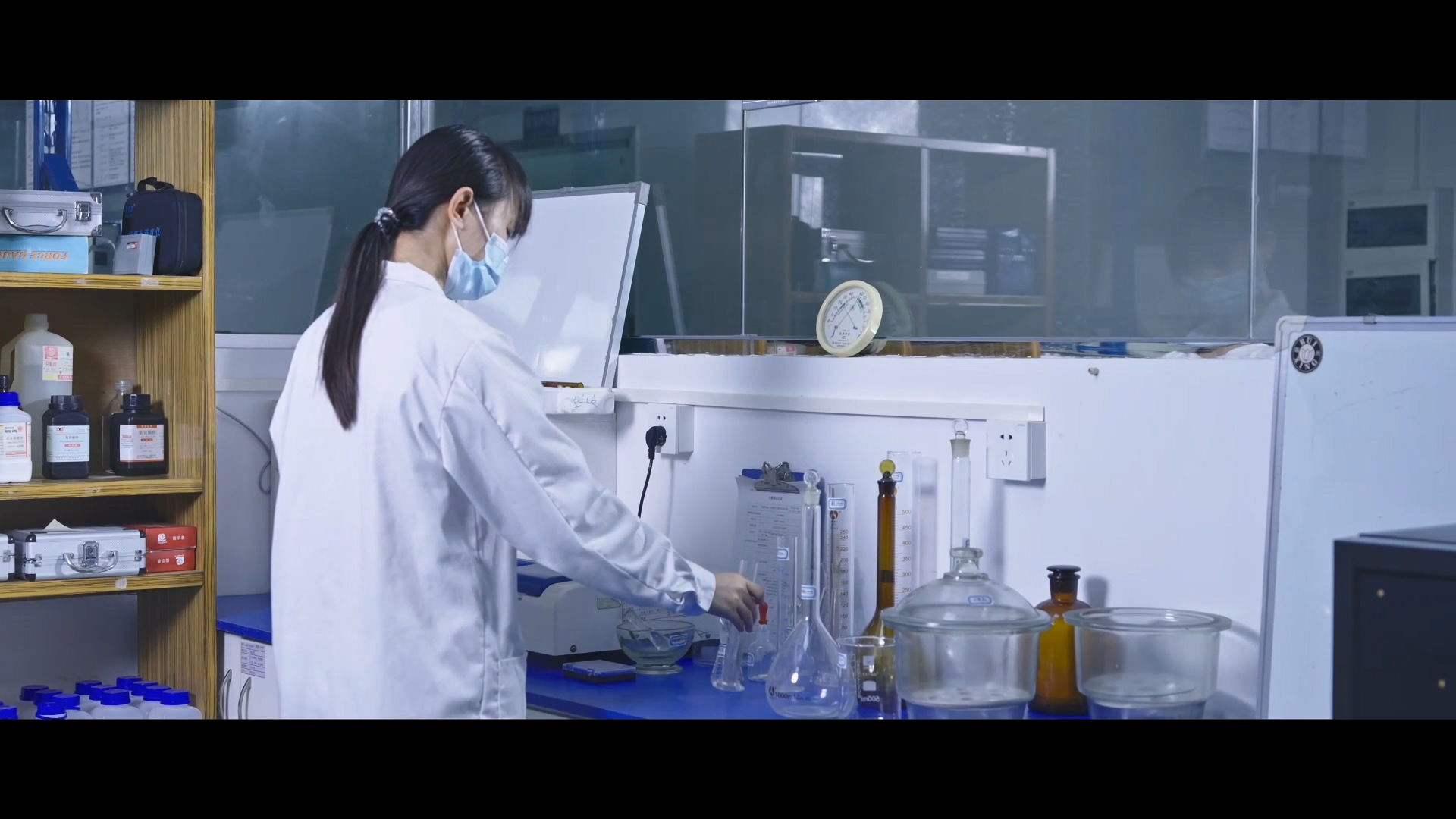
A quality-control claim is only useful if you know the inspection stage and the record that travels with the shipment.
A 40-Minute Pre-Screen: Seven Steps
- Build the configuration matrix. List every enclosure family your project may use (frameless, sliding, hinged, pivot, folding, arc, bathtub, fixed screen) and mark whether the supplier publishes a model number for each. Two or more missing families is a prompt to ask who actually produces them.
- Read the hardware line. Look for a named material grade, a stated finish and evidence that hardware changes with configuration. If the quotation says 'stainless steel hardware', request grade confirmation in writing before the sample stage.
- Check thickness and treatments against the destination market. Match quoted thickness to the configuration you are buying, and confirm that laminated, tinted, flute, chemically frosted, easy-clean or film-coated options exist for that model rather than only for the catalogue cover.
- Verify the quality-control statement. SHKL states 100% inspection. Ask what the inspection covers, at which production stage it happens, and what record travels with the shipment. A QC claim without a record format is a marketing sentence.
- Separate certificates from product conformity. Record the number, issuer and expiry date. SHKL holds ISO 9001 (04924Q00629R0M), ISO 14001 (04924E00351R0M) and ISO 45001 (04924S00316R0M), issued on 11 May 2024 by Guangdong Quality Testing CTC Certification Co., Ltd. and valid until 10 May 2027. These are management-system certificates covering R&D and manufacture of bathroom cabinets and manufacture of fixed universal lighting fixtures. They do not replace a product conformity assessment against EN 14428 or CPSC 16 CFR 1201, so ask which document covers the shower door line and which site it applies to.
- Confirm commercial terms early. An MOQ of 50, a lead time of 30 to 45 days and an OEM customization scope covering size, color, material, finish, hardware, logo and design style is a complete answer. 'It depends' on all three is a red flag, not a negotiation opening.
- Score, shortlist, then sample. Only after steps one to six should you spend money on samples. A sample cannot fix a configuration gap, but it can confirm or destroy the two signals that matter most: hardware grade and glass specification.
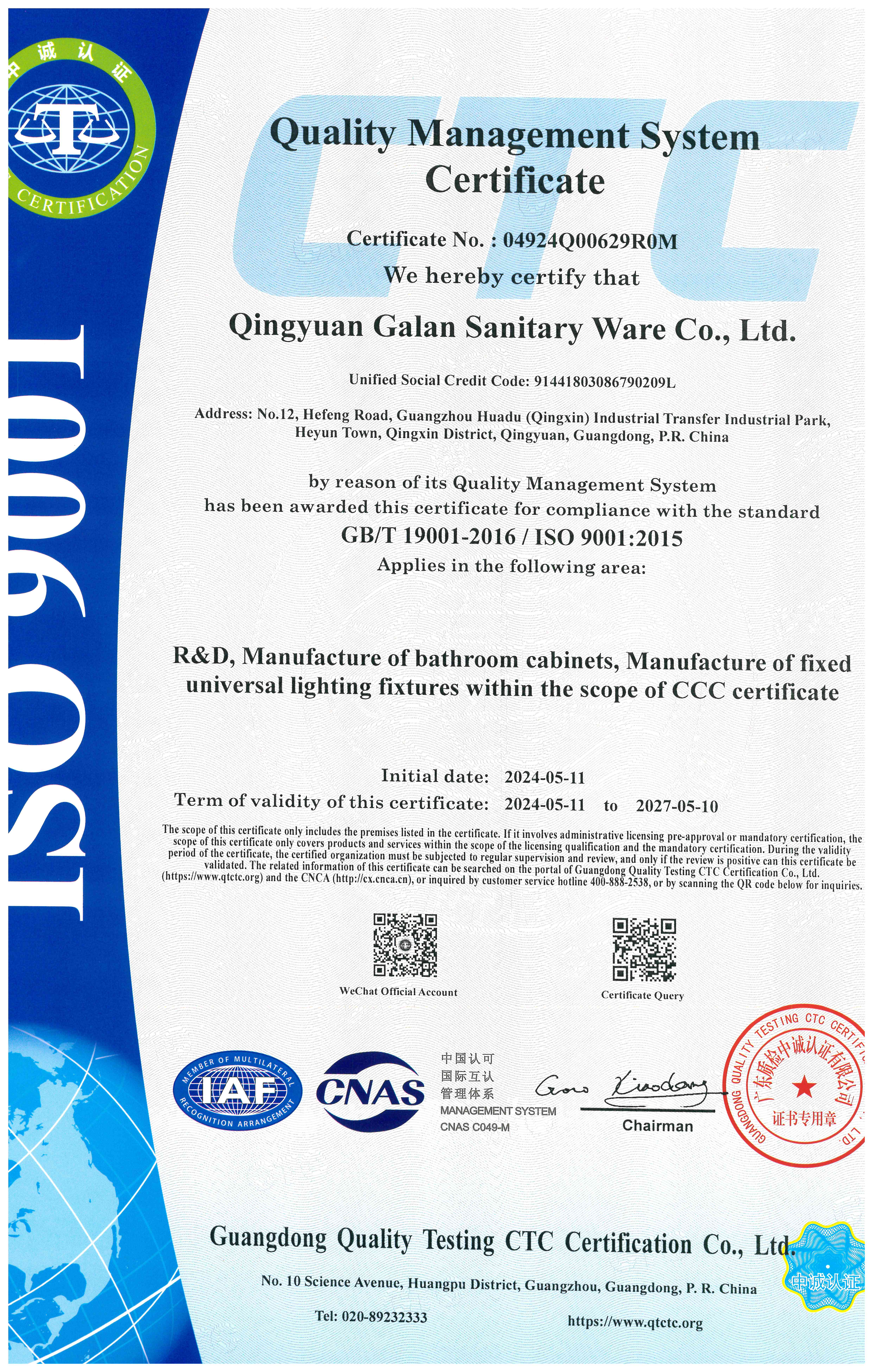
A certificate is a document with a number, a scope and an expiry date. A logo is not.
Where the Signals Changed the Buying Decision
Four documented project types show how the same three signals produce different shortlists, because the configuration and the destination market change what matters.
Australia, 190 units, bathroom shower application. A shower door customization client in Australia ran a supply relationship documented over a 5 to 10 year period. The products met Australian safety standards, installation was smooth, and the highlights recorded were appropriate sizing and product function rather than price. In screening terms, the decisive signals were glass specification against Australian safety requirements and hardware consistency across repeat orders, because repeat orders are where an inconsistent hardware set becomes visible.
Thailand, 110 units, safety laminated glass. A shower door customization client specified safety laminated glass with an anti-shatter design for bathroom applications. The glass met local standards, installation was smooth and customer satisfaction was high. This is the clearest example of Signal 3 deciding a shortlist: when the specification names laminated glass, a supplier offering only clear tempered panels cannot be considered at any price.
United States, 250 units, hotel bathrooms. A bathroom furniture customization client used 250 units for hotel bathroom purposes over a 2 year project. Design and product fidelity met requirements, delivery was on time, product quality met US market standards and customer feedback recorded high satisfaction. Here the scope test mattered most: a hotel programme involves repetitive dimensions and multiple bathroom types, so coordinating enclosures and vanity models such as AS813047, AS813050, AS813108 and AS813109 under one supplier removed a layer of dimensional coordination between trades.
Canada, 50 units, bathroom and kitchen cabinetry. A smaller order, documented over a 5 to 10 year relationship, where the materials met requirements, products met Canadian safety standards and delivery was on time. The lesson is that order size does not change the screening logic: the material specification and the applicable standard were stated explicitly at quotation, which is the whole difference between a testable offer and an untestable one.
Signal Scorecard: Strong Evidence versus Red Flags
The table below converts the three signals and the scope test into a screening sheet. The right-hand column shows what a documented answer looks like, using SHKL's published range as the reference example.
| Observable signal | Strong evidence | Red flag | Documented example |
|---|---|---|---|
| Configuration coverage | Separate model numbers per enclosure family | One image reused for every type; no model list | Frameless KL-AS5104310 and KL-AS5577310; sliding KL-AS5608212 and KL-AS5511312; hinged KL-AS5507310; arc KL-AS5210422; bathtub KL-AS5605110-5; fixed screen KL-AS001-1 |
| Hardware specification | Grade named and matched to configuration, finish stated | 'Stainless steel' with no grade; one hardware set for every door type | 304 stainless steel and aluminium alloy options specified across the range |
| Glass depth | Thickness options and multiple treatments per model | Only 'clear tempered glass' offered | 6, 8, 10 and 12 mm tempered glass; clear, tinted, laminated, flute, chemically frosted, easy-clean and film-coated options |
| Quality control | Defined inspection regime and a shipment record | 'Quality guaranteed' with no process named | 100% inspection stated |
| Certification | Number, issuer, scope and expiry date | Logo with no number or expiry | ISO 9001 04924Q00629R0M, ISO 14001 04924E00351R0M, ISO 45001 04924S00316R0M, issued 11 May 2024, valid to 10 May 2027 |
| Commercial terms | MOQ, lead time and customization scope stated up front | 'Contact us' for every commercial question | MOQ 50; lead time 30 to 45 days; OEM customization of size, color, material, finish, hardware, logo and design style |
| Category scope | Adjacent categories with their own models and hardware | Enclosures only, no bathroom furniture path | Vanities AS813047, AS813050, AS813108 and AS813109 with Unihopper soft-closing slides and DTC hinges |
304 Stainless Steel versus Aluminium Alloy: Reading the Hardware Line
Neither material is inherently correct. The specification is what matters, and the table below shows what each choice implies so you can interrogate the line in a quotation rather than accept it.
| Aspect | 304 stainless steel | Aluminium alloy |
|---|---|---|
| Typical role | Hinges, handles, brackets and structural fittings, particularly on frameless and hinged doors | Frames, profiles and lighter fittings, including framed glass shower doors and some sliding systems |
| Corrosion behaviour in a wet room | Austenitic grade relying on chromium for corrosion resistance, commonly specified for wet environments | Depends on the surface treatment, anodising or powder coating, and on how it is controlled |
| Weight and handling | Heavier, adds mass to a moving door | Lighter, useful where large sliding panels must stay manageable |
| Cost direction | Higher material cost, generally specified where longevity is prioritised | Lower material cost, common in volume-driven projects |
| What to verify in the quote | Grade confirmation in writing and stated finish | Treatment type, coating quality claim and finish warranty |
A 304 stainless steel fitting on a frameless shower door in a coastal project and an aluminium alloy frame on a framed glass shower screen can both be correct choices, provided each is stated, matched to the configuration and supported by a finish and a spare-part path.
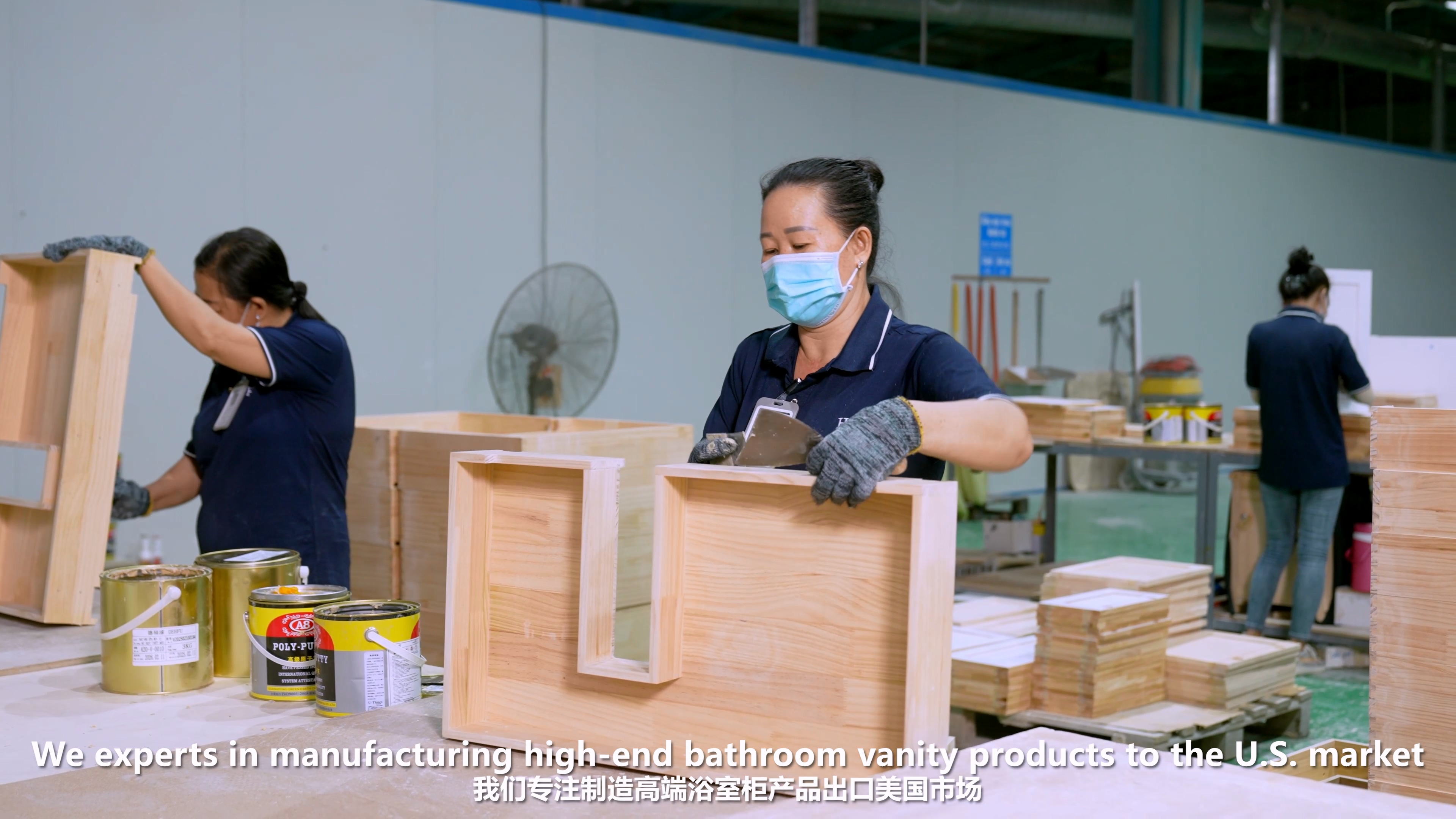
Hardware specification discipline shows up across a supplier's categories: Unihopper soft-closing slides and DTC hinges on the vanity range, grade-named materials on the enclosure range.
Frequently Asked Questions
How do I check that a shower door supplier's certificates actually cover the product I am buying?
Run three checks. First, identify what kind of document it is: a management-system certificate such as ISO 9001, ISO 14001 or ISO 45001, or a product conformity assessment against a shower enclosure standard such as EN 14428:2015+A1:2018 or a safety glazing requirement such as CPSC 16 CFR 1201. Second, read the scope and the site: SHKL's ISO certificates, numbers 04924Q00629R0M, 04924E00351R0M and 04924S00316R0M, were issued on 11 May 2024 by Guangdong Quality Testing CTC Certification Co., Ltd. and are valid until 10 May 2027, with a documented scope covering R&D and manufacture of bathroom cabinets and manufacture of fixed universal lighting fixtures, so a buyer should confirm separately which document applies to glass shower enclosures and to which production site. Third, check the validity date against your shipment date. Management-system certification is not product conformity, and a supplier that conflates the two has answered a question you did not ask.
Does a wider shower door model range really mean a supplier can build my configuration?
Not on its own. A broad range is a hypothesis about capability, and the cost of holding it is real: separate model numbers across frameless, sliding, hinged, arc, bathtub and fixed screen families imply separate glass processing, separate hardware sets and separate assembly fixtures. SHKL's published range separates those families by model number and reports a monthly shower door capacity of 10,000 units against a combined production area of 140,000 m² in China and Vietnam. Test the hypothesis before you trust it: request a dimensioned specification sheet per model, ask which hardware and glass options attach to that model, then confirm both with a sample.
What drives the price difference between two quotes for a similar-looking shower door?
Compare cost drivers rather than totals. The largest are hardware material (304 stainless steel versus aluminium alloy), glass thickness (6, 8, 10 or 12 mm) and treatment (laminated, easy-clean, film-coated, flute, chemically frosted or tinted), configuration complexity (a frameless door with structural fittings, a sliding system with track and rollers, or an arc enclosure requiring curved glass), customization scope (size, color, material, finish, hardware, logo and design style), order volume measured against the MOQ of 50, and the after-sales path including spare parts. Ask each supplier to break the quote down on those lines. A supplier that cannot separate material from configuration is quoting a feeling, not a product.
Can I validate hardware and glass with a sample before committing to production?
Yes, and it is the cheapest way to test the two signals that matter most. On the sample, check the hardware grade marking and finish, the glass edge quality, coating uniformity, the panel thickness against the stated specification, the opening and closing action, and the seals. A sample cannot fix a configuration gap, but it can confirm or eliminate a supplier in one step. SHKL accepts OEM customization across size, color, material, finish, hardware, logo and design style, with a lead time of 30 to 45 days and an MOQ of 50, so a sample and a quotation can be requested together: contact info@shklbathroom.com or +86 13790005061 on WhatsApp, or download the catalogue at the link at the end of this article.
What lead time and after-sales terms should I expect from a shower door supplier?
A stated lead time of 30 to 45 days, given against a defined configuration rather than in the abstract, is a working baseline; SHKL publishes that range together with an MOQ of 50 and after-sales support covering warranty support, remote after-sales consultation and spare-part supply. The red flags are a lead time quoted before the configuration is fixed, and no stated spare-part path, because hardware is the part of a shower enclosure that wears. Suppliers with production in more than one location, as SHKL reports across China and Vietnam, can also reduce single-site supply risk, but treat that as a claim to verify during an audit rather than as a guarantee.
Conclusion: Screen on Signals, Buy on Evidence
A supplier that publishes six configuration families with their own model numbers, names its hardware grades, lists glass thickness and treatment options, states its inspection regime, and can coordinate a vanity range has given a buyer something no brochure claim can: a set of statements specific enough to be checked. That is the function of this framework. It converts marketing language into a testable list, at a cost of about forty minutes.
What the framework cannot do is prove quality. Model-range breadth does not prove tolerance control, a named grade does not prove corrosion performance, and a certificate number does not prove product conformity to EN 14428 or CPSC 16 CFR 1201. Only a sample, a test report and an audit do that. Use the signals to decide where to spend that effort, and use the red flags to decide where not to.
Next step: test the signals on a real order
Request a sample against your configuration, a quotation broken down by hardware material and glass option, or the full product catalogue covering shower doors, bathroom vanities and LED bathroom mirrors.
Website: www.shklbathroom.com
Email: info@shklbathroom.com
WhatsApp: +86 13790005061
Catalogue download: SHKL product catalogue (PDF)
Foshan SHKL Sanitary Ware Co., Ltd, established 2004. Manufacturer of bathroom vanities, shower doors and LED bathroom mirrors, with production in China and Vietnam.
Have Questions or Need More Details?
Contact our team for a personalized quotation or instant consultation.
Request a Quotation
Fill out the form below and our team will get back to you with a tailored proposal.
WhatsApp Direct Chat
Prefer to chat in real-time? Message us on WhatsApp for instant assistance & quick answers.
- Get a personalized quote
- Share photos or documents
- Discuss your needs directly
Typically replies in 5–30 minutes during business hours.