
Shower Door Glass Craftsmanship Options Explained: Clear, Tinted, Laminated, Flute & Frosted
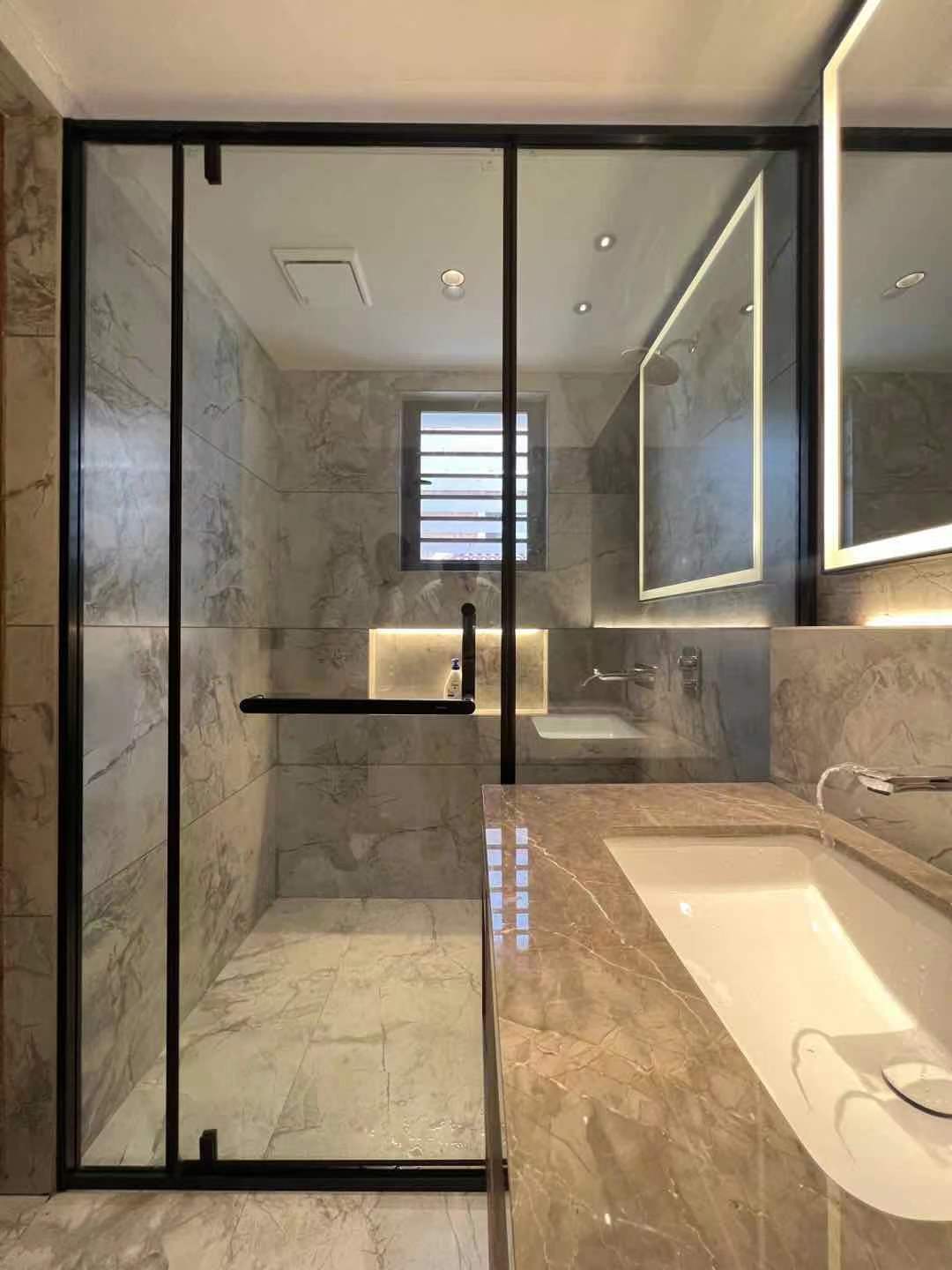
Shower Door Glass Craftsmanship Options Explained: Clear, Tinted, Laminated, Flute & Frosted
The glass option you choose decides three things before any drawing is approved: how much privacy the enclosure gives, how the panel behaves if it breaks, and how much effort the surface demands in daily cleaning. The hardware then decides how that panel moves, and whether the door can be classified as frameless.
SHKL (Foshan SHKL Sanitary Ware Co., Ltd) is a bathroom manufacturer established in 2004, producing bathroom vanities, shower doors and LED bathroom mirrors across a 100,000 m² production base in China and a 40,000 m² factory in Ho Chi Minh City, Vietnam. Its shower door range lists seven glass craftsmanship options — clear, tinted, laminated, flute, chemically frosted, easy-clean and film-coated — combined with either aluminium alloy or 304 stainless steel hardware. This guide decodes each option in buyer language, pairs it with the hardware decision, and closes with a spec checklist you can copy before ordering.
The Real Problem: Seven Options, One Spec Sheet
A typical shower door quotation lists glass as a single line: “8 mm tempered, clear.” When a project needs privacy in a hotel bathroom, anti-shatter retention in a family unit, or a decorative fluted feature wall in a showroom, that single line is no longer enough. Buyers then have to choose between four things that pull in different directions:
- Privacy — whether the panel is transparent, partially obscuring, or diffusing.
- Safety behaviour — whether the glazing is monolithic tempered glass or a laminated assembly that retains fragments.
- Cleaning routine — smooth factory-coated surfaces versus textured or etched surfaces.
- Design intent — invisible minimalism, a smoked or bronze tone, or a visible linear texture.
The mistake is choosing the glass on appearance alone and then discovering the cleaning routine or the safety documentation does not match the market. Glass and hardware should be specified together, because a heavy glass package on light-duty hardware is a mismatch that shows up as sagging hinges or stiff slides after installation.
Industry Background: The Rules Behind the Options
Three reference points frame any glass decision in 2026:
- EN 14428:2015+A1:2018 sets functional requirements and test methods for domestic shower enclosures in the European market and is the reference used for CE marking.
- ASTM C1048-18 is the standard specification for heat-strengthened and fully tempered flat glass, the baseline for safety glass in architectural applications.
- The National Glass Association frameless shower enclosure design guide states that shower-enclosure glass should be safety glazing meeting the federal impact requirement of CPSC 16 CFR 1201, and describes monolithic tempered glass of at least 3/8 inch (10 mm) for the frameless category it covers. That figure is category guidance, not a universal minimum for every framed, sliding or hinged configuration, and local code always governs.
Market context matters less than specification discipline, but it explains the direction of demand. Third-party research cited in 2026 industry data values the global shower doors market at USD 13.5 billion in 2023, and frameless glass doors are reported to hold a 75% share in North America as of 2025. In practice, this means export buyers are increasingly asked for frameless configurations matched to a specific glass appearance — which is exactly where the seven-option list becomes commercially useful.
The Seven Glass Options, Decoded
SHKL lists the same craftsmanship set across the shower door range: Clear glass / Tinted Glass / Laminated Glass / Flute Glass / Chemically Frosted Glass / Easy-clean / Film-coated. Five are visual or texture families; two are surface treatments that can sit on top of a base glass. Treated separately, each option answers a different buyer question.
1. Clear Glass — Zero Privacy, Maximum Light
What it changes: nothing is hidden and nothing is added. Clear glass keeps the smallest bathroom visually open, which is why it dominates modern frameless specifications. Where it fits: en-suite bathrooms, compact apartments, showroom displays where the hardware should be the visible detail. Limit: clear glass shows water spots and soap film directly, so buyers specifying clear in hard-water regions should pair it with the easy-clean treatment rather than accept a heavier cleaning routine.
2. Tinted Glass — Privacy With a Tone
What it changes: the panel reduces transparency and introduces a colour direction, so silhouettes are softened rather than fully visible. Where it fits: hospitality bathrooms, shared family bathrooms, and projects where the design palette already uses dark metal hardware. Limit: a tint is a visual decision, not a safety upgrade — it does not replace laminated construction where fragment retention is a requirement. Confirm the specific tint tone against a physical sample, because monitor rendering is unreliable.
3. Laminated Glass — The Safety Option
What it changes: a laminated assembly bonds glass plies with an interlayer, so fragments stay held in place instead of separating when the panel is struck. This is the option to specify when the buyer's question is “what happens if it breaks” rather than “what does it look like.” Where it fits: family bathrooms, hotels, and markets where anti-shatter behaviour is written into the buyer's own specification. SHKL's Thailand project documents exactly this logic, with safety laminated glass and an anti-shatter design supplied across 110 bathroom units. Limit: laminated glass is heavier and thicker than a single tempered ply of the same nominal build, so hinge and slide capacity must be confirmed together with the glass package, not after it.
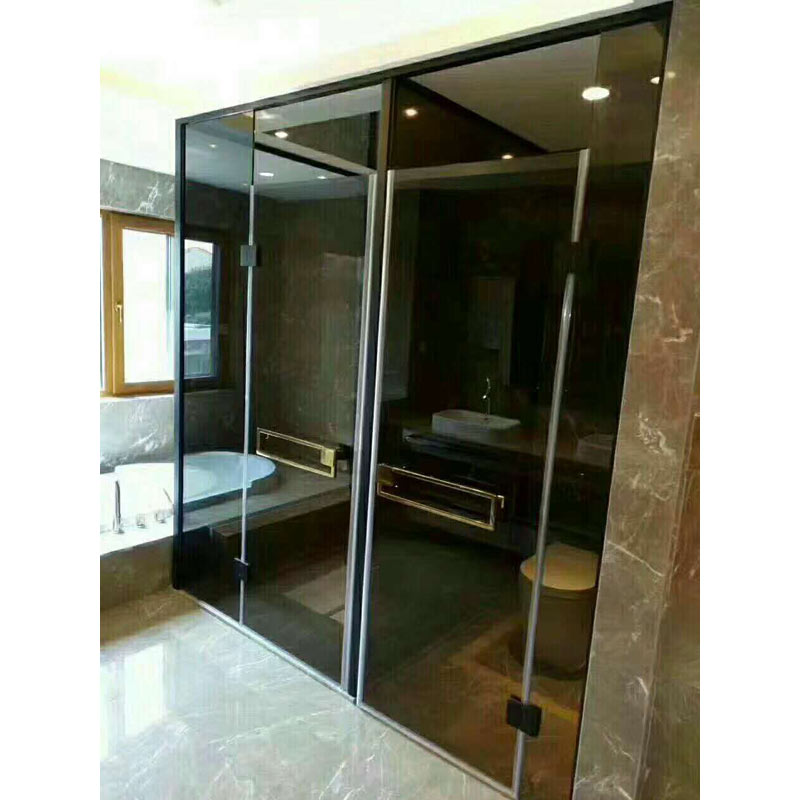
Safety laminated glass with anti-shatter design, supplied for a 110-unit bathroom project in Thailand.
4. Flute Glass — Texture as a Design Feature
What it changes: a reeded, vertically fluted surface breaks up reflected light and partially obscures the interior, so the panel becomes a visible design element rather than a transparent one. Where it fits: feature bathrooms, boutique hotels, and residential projects where the enclosure is meant to be seen. Limit: the flutes hold water in the channels, so squeegee discipline matters more than on smooth glass, and the pattern must be oriented consistently across adjacent panels or the vertical lines will not align at the joint.
5. Chemically Frosted Glass — Diffusion Without a Film
What it changes: a chemical etch produces a translucent surface that diffuses light and obscures detail, giving privacy while keeping the bathroom bright. Because the effect sits in the glass surface rather than on top of it, there is no film edge to lift. Where it fits: street-facing bathrooms, guest bathrooms next to bedrooms, and offices converted into residential units. Limit: an etched surface is not self-cleaning — mineral deposits sit in the texture, so buyers should still specify the easy-clean treatment on top where the water is hard, and should avoid abrasive pads that dull the etch unevenly.
6. Easy-Clean Treatment — The Cleaning Decision
What it changes: a factory-applied surface treatment makes water sheet off and reduces how strongly mineral deposits bond to the glass, which shortens the weekly cleaning routine. Where it fits: almost every project, but especially clear glass, frosted glass and high-turnover hospitality rooms where housekeeping time is a real cost. Limit: it is a maintenance-reduction measure, not a permanent coating that eliminates cleaning, and it should not be scrubbed with abrasive or high-acid products. Buyers should confirm the care instruction in writing at order stage.
7. Film-Coated Glass — Effect Applied on Top
What it changes: a film layer is applied to the glass to deliver a visual or privacy effect without changing the base glass build, which makes it the most flexible option for design-led orders. Where it fits: projects that need a specific decorative or opacity effect across a batch, and retail or showroom installations where the look drives the sale. Limit: the film is a surface layer, so edge protection, cleaning chemistry and installation handling all matter more than on uncoated glass. It is also the option most worth validating on a physical sample before the full order is released.
Glass Options at a Glance
| Glass option | Privacy effect | Safety role | Cleaning effort | Design intent |
|---|---|---|---|---|
| Clear | None | Base glazing; type depends on build | Spots visible; improved with easy-clean | Minimal, open, hardware-led |
| Tinted | Partial; silhouettes softened | Visual only, not a safety upgrade | Moderate; tone can mask light spotting | Tonal, hospitality, paired with dark hardware |
| Laminated | Same as base glass used | Fragment retention, anti-shatter design | As per base glass | Invisible safety specification |
| Flute | Partial; linear obscuring | As per base glass | Higher; water sits in the channels | Decorative vertical texture |
| Chemically frosted | High; light passes, detail does not | As per base glass | Moderate to higher; avoid abrasives | Bright but private |
| Easy-clean | No change | No change | Lower; water sheets off | Invisible service upgrade |
| Film-coated | Effect depends on film specified | No change to glass build | Care at edges; film is a surface layer | Design-led or opacity-driven batches |
Option names as listed in the SHKL shower door range. Performance in a given market must be confirmed against that market's safety-glazing requirement and the model's test documentation.
The Hardware Half: Aluminium Alloy vs 304 Stainless Steel
Every glass option above is offered across the range on two hardware materials. This is the second decision, and it determines the opening type, the load path and the finish direction.
Aluminium alloy hardware covers five listed configurations: KL-AS5104310 (frameless shower door), KL-AS5507310 (hinge shower door), KL-AS5608212 (sliding shower door), KL-AS5210422 (arc shower door) and KL-AS5605110-5 (bathtub shower door). 304 stainless steel hardware covers three: KL-AS001-1 (shower screen), KL-AS5511312 (sliding shower door) and KL-AS5577310 (hinge shower door). The “304” designation is a chromium-nickel stainless grade commonly specified for bathroom hardware; neither material is universally superior, and the correct choice is driven by the project specification, the finish requirement and the target price band.
| Model | Configuration | Hardware material | Glass craftsmanship options |
|---|---|---|---|
| KL-AS5104310 | Frameless shower door | Aluminium alloy | Clear / Tinted / Laminated / Flute / Chemically Frosted / Easy-clean / Film-coated |
| KL-AS5507310 | Hinge shower door | Aluminium alloy | Same set |
| KL-AS5608212 | Sliding shower door | Aluminium alloy | Same set |
| KL-AS5210422 | Arc shower door | Aluminium alloy | Same set |
| KL-AS5605110-5 | Bathtub shower door | Aluminium alloy | Same set |
| KL-AS001-1 | Shower screen | 304 stainless steel | Same set |
| KL-AS5511312 | Sliding shower door | 304 stainless steel | Same set |
| KL-AS5577310 | Hinge shower door | 304 stainless steel | Same set |
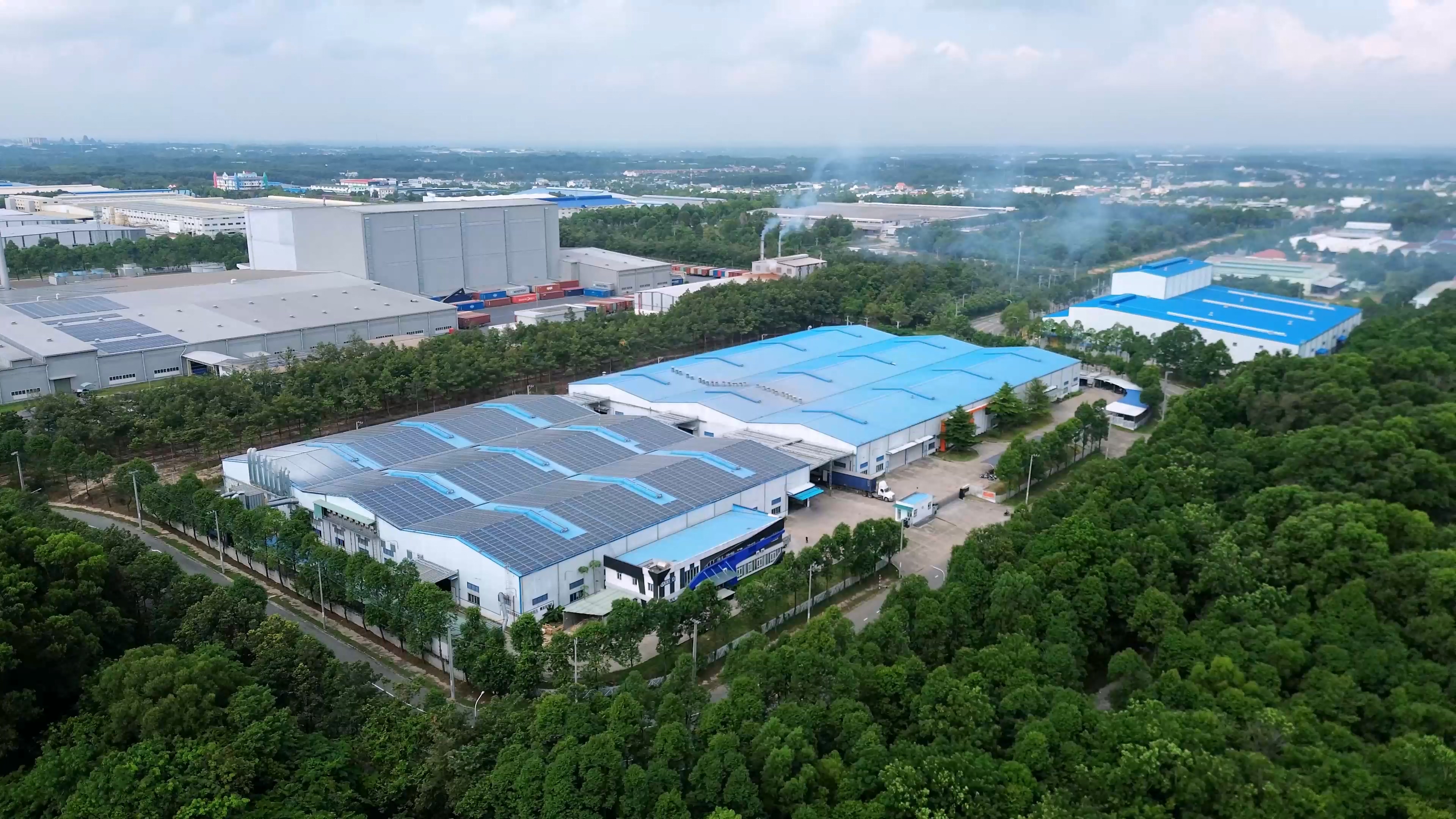
SHKL's 40,000 m² production base in Ho Chi Minh City, Vietnam, operates alongside the 100,000 m² China base.
What “Frameless” Actually Classifies
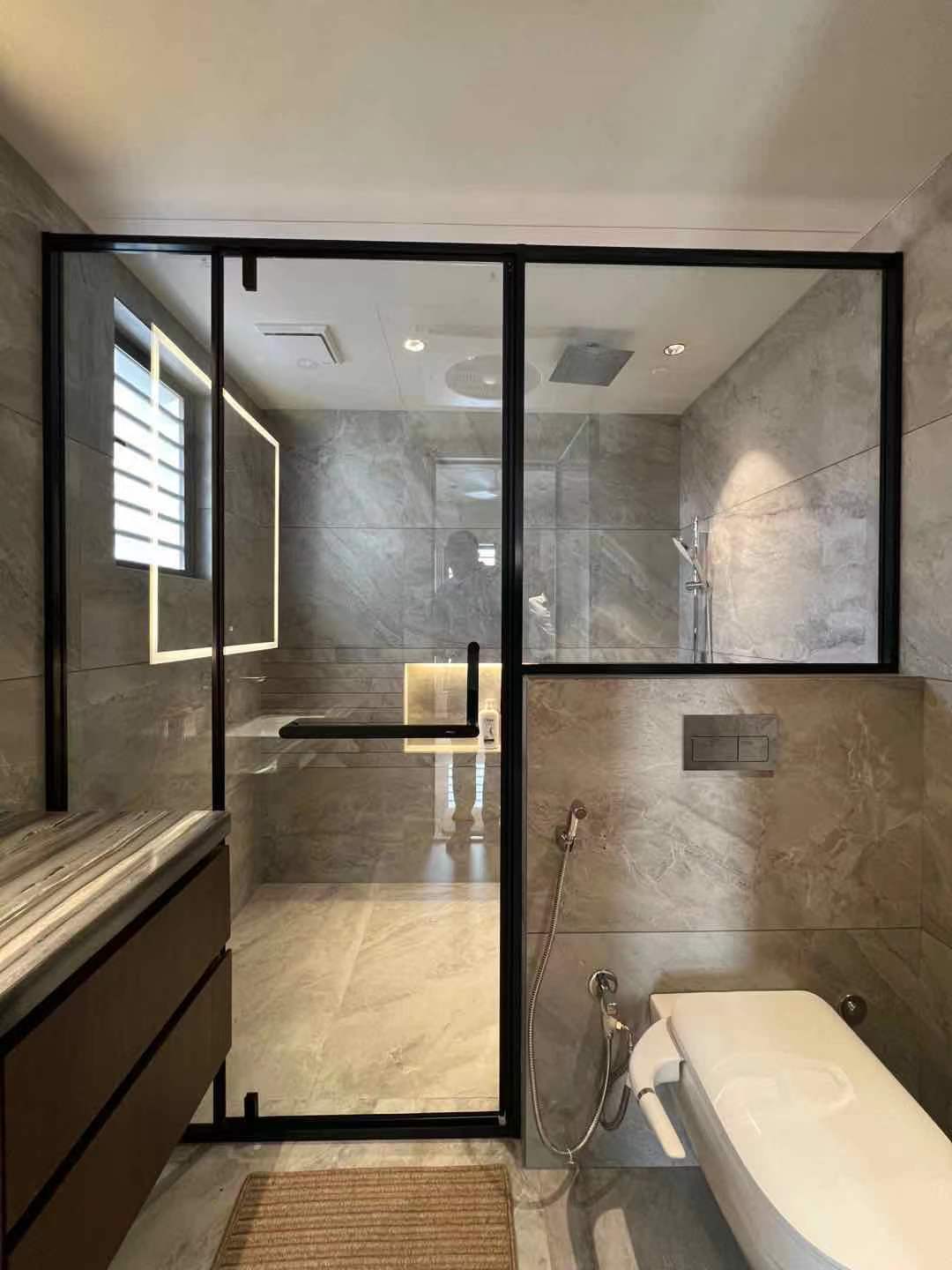
Frameless is a classification of the edge condition, not of the glass pattern. A frameless door has no perimeter frame around the glass edges; the panel is held by point-fixed hardware such as hinges, clamps or a channel at one edge only. Framed screens carry a frame around the panel, and semi-frameless designs keep framing on one or two edges. Only KL-AS5104310 is listed explicitly as a frameless shower door in the current range; the other models are classified by opening type — hinge, sliding, arc, bathtub and shower screen.
Because the glass edge is exposed, frameless construction puts more demand on glass stiffness and on hardware stiffness. The NGA design guide describes monolithic tempered glass of at least 3/8 inch (10 mm) for the frameless category it covers, while noting that this is category guidance rather than a universal minimum. SHKL lists 6 mm, 8 mm, 10 mm and 12 mm tempered glass options across its glass shower doors, so the thickness and the frameless classification must be agreed together — not one after the other.
Step-by-Step: Specifying the Glass Package
- Set the privacy target first. Decide whether the room needs full transparency (clear), softened silhouettes (tinted), partial obscuring (flute) or true diffusion (chemically frosted). Everything downstream follows this choice.
- Then confirm the safety requirement for the destination market. Check the applicable local safety-glazing rule — EN 14428 for the European market, and the federal impact requirement referenced by the NGA guide for the United States context — and only then decide whether a laminated build is required.
- Lock the thickness. Select from the listed 6 mm, 8 mm, 10 mm and 12 mm tempered options in line with the door type and the frameless classification.
- Add the surface treatment. Specify easy-clean where water is hard or housekeeping time is costed; specify film-coated only after a sample has been approved.
- Choose the hardware material and model. Aluminium alloy for KL-AS5104310, KL-AS5507310, KL-AS5608212, KL-AS5210422 or KL-AS5605110-5; 304 stainless steel for KL-AS001-1, KL-AS5511312 or KL-AS5577310.
- Match the opening type to the room. Hinge and pivot configurations suit corner alcoves; sliding and bypass configurations suit wider or recessed openings; arc and bathtub models solve curved trays and over-bath installs; shower screens handle partial protection.
- Approve a sample, then release the batch. Every unit is checked under 100% inspection before shipment, and pre-shipment testing is the acceptance criterion, so the sample should be approved against the same checklist.
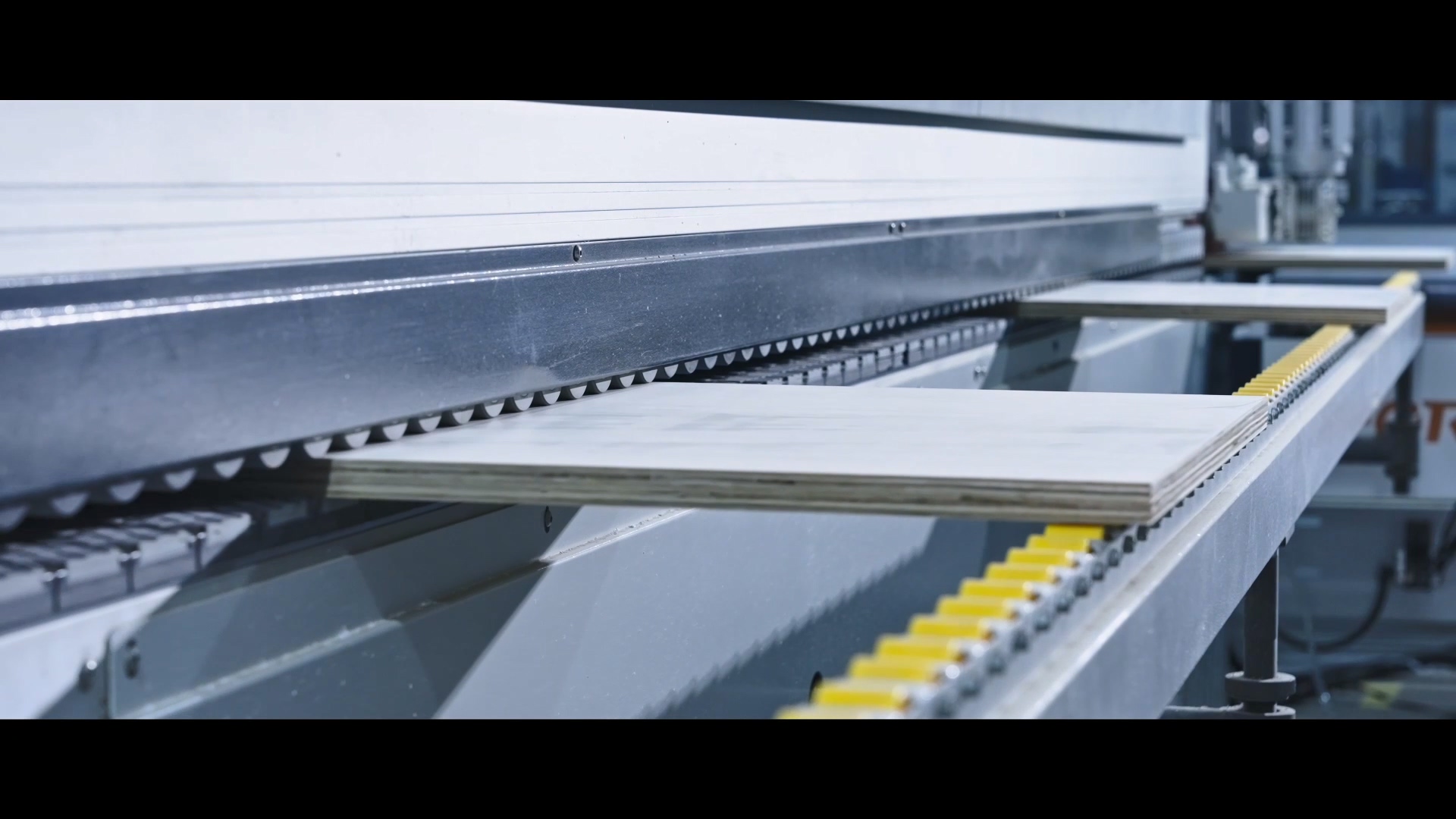
Inspection and testing are carried out before shipment; all units pass 100% inspection.
Use Cases: How the Options Combine in Practice
Australia — 190 units, bathroom shower applications. The project used model 3721 (KL-AS5511312, sliding shower door, 304 stainless steel). Reported outcomes were that products met Australian safety standards, installation ran smoothly, and customer satisfaction was high. The selection logic is typical of a project order: a sliding configuration for the opening, stainless hardware for the finish expectation, and glass specified against the local safety requirement.
Thailand — 110 units, bathroom applications. This project was specified with safety laminated glass and an anti-shatter design. Products met local standards, installation was smooth, and satisfaction was high. The glass decision — not the hardware — was the defining specification, which is exactly the case where the laminated option earns its place.
Both projects illustrate the same rule: the glass option is chosen against a safety or privacy requirement, and the hardware is then matched to the load and the finish. Buyers who reverse that order usually end up re-specifying.
Pre-Order Spec Checklist (Copy This)
- Glass option named exactly: clear, tinted, laminated, flute, chemically frosted, easy-clean or film-coated.
- Base glass thickness confirmed from 6 mm, 8 mm, 10 mm or 12 mm tempered.
- Privacy target written into the brief, not implied by the render.
- Destination-market safety-glazing requirement identified and cited.
- Laminated build confirmed if fragment retention is required.
- Easy-clean treatment confirmed and care instruction requested in writing.
- Hardware material fixed: aluminium alloy or 304 stainless steel.
- Model code recorded, e.g. KL-AS5511312 or KL-AS5104310.
- Frameless / framed classification stated on the drawing.
- Opening type matched to the room: hinge, sliding, arc, bathtub or screen.
- Sample approved before batch release; pre-shipment test as acceptance criterion.
- Quantity, lead time and after-sales terms confirmed in the purchase order.
FAQ
Do these glass options meet the safety-glazing requirements of my market?
The options are manufacturing choices; compliance is a market question. For Europe, EN 14428:2015+A1:2018 sets functional requirements and test methods for domestic shower enclosures and is the reference used for CE marking. In the United States context, the NGA frameless shower enclosure design guide requires safety glazing meeting the impact requirement of CPSC 16 CFR 1201 and references ASTM C1048 for tempered glass. At supplier level, SHKL holds ISO 9001 (certificate 04924Q00629R0M), ISO 14001 (04924E00351R0M) and ISO 45001 (04924S00316R0M), all issued 11 May 2024 and valid until 10 May 2027 by Guangdong Quality Testing CTC Certification Co., Ltd. These are management-system certificates, not product conformity certificates — so buyers should request the model-specific test documentation alongside them.
Can different glass options and hardware materials be combined in one order?
Yes. The same seven glass craftsmanship options are listed across the whole range, on both aluminium alloy models (KL-AS5104310, KL-AS5507310, KL-AS5608212, KL-AS5210422, KL-AS5605110-5) and 304 stainless steel models (KL-AS001-1, KL-AS5511312, KL-AS5577310). OEM production is supported with customization of size, colour, material, finish, hardware, logo and design style. Monthly production capacity is 10,000 units, with 100% inspection on every unit.
What determines cost and what is the minimum order quantity?
The minimum order quantity is 50 units. Cost is driven by the combination rather than by a single line item: glass option and thickness, hardware material, panel size and finish selection. Because the specification set is configurable, pricing is quoted per project against a confirmed model and glass package rather than published as a list — which is also why the checklist above matters before a quotation is requested.
Can I validate a sample before committing to the order?
Yes, and it is the recommended route for film-coated, flute and tinted options where appearance decides the sale. Approval should be handled against the same points used for batch acceptance: glass option name, thickness, hardware material, model code and finish. Pre-shipment testing is the stated acceptance criterion, and after-sales support covers warranty support, remote after-sales consultation and spare parts supply through the long-term support programme.
What is the typical lead time?
The typical production lead time is 30–45 days. For projects with mixed glass options or more than one hardware material, plan the sample approval and the pre-shipment inspection as separate milestones inside that window. To start, send your glass option, thickness, model code and quantity to info@shklbathroom.com, or review the full shower door range and the configuration selection guide before finalising the brief.
Conclusion
The glass option is a specification decision, not a decorative one. Clear glass keeps a small room open, tinted glass softens silhouettes, laminated glass answers the question of what happens on impact, flute glass turns the panel into a visible feature, chemically frosted glass delivers privacy without losing daylight, easy-clean treatment reduces the cleaning routine, and film-coated glass carries a design effect on the surface. Then the hardware — aluminium alloy or 304 stainless steel — and the frameless classification decide how that panel is held and how it moves.
Specify them in that order, confirm the safety requirement for the destination market, approve a sample, and the order releases without rework.
Next step: sample, quotation or catalogue
Send your glass option, thickness, model code and quantity to info@shklbathroom.com or WhatsApp +86 13790005061. Download the SHKL product catalogue (PDF) for the full range reference, or visit www.shklbathroom.com.
Foshan SHKL Sanitary Ware Co., Ltd — established 2004. Production: 100,000 m² in China and 40,000 m² in Ho Chi Minh City, Vietnam. Export markets include North America, Europe, Oceania and the Middle East.
Have Questions or Need More Details?
Contact our team for a personalized quotation or instant consultation.
Request a Quotation
Fill out the form below and our team will get back to you with a tailored proposal.
WhatsApp Direct Chat
Prefer to chat in real-time? Message us on WhatsApp for instant assistance & quick answers.
- Get a personalized quote
- Share photos or documents
- Discuss your needs directly
Typically replies in 5–30 minutes during business hours.