
Shower Door Glass Options 101: Clear, Tinted, Laminated, Flute, Frosted, Easy-Clean & Film-Coated
Shower Door Glass Options 101: Clear, Tinted, Laminated, Flute, Frosted, Easy-Clean & Film-Coated
Glass is the largest visible surface on a shower door, yet the specification line often mixes base glass, pattern, privacy treatment and surface coating into one list. SHKL, a sanitary ware manufacturer established in 2004, lists seven glass craftsmanship options across its shower door range: clear glass, tinted glass, laminated glass, flute glass, chemically frosted glass, easy-clean and film-coated. This guide explains what each option means, how the options apply to models such as KL-AS5605110-5 and KL-AS5511312, and how residential construction and commercial hospitality buyers can narrow the choice before requesting a sample or quotation.
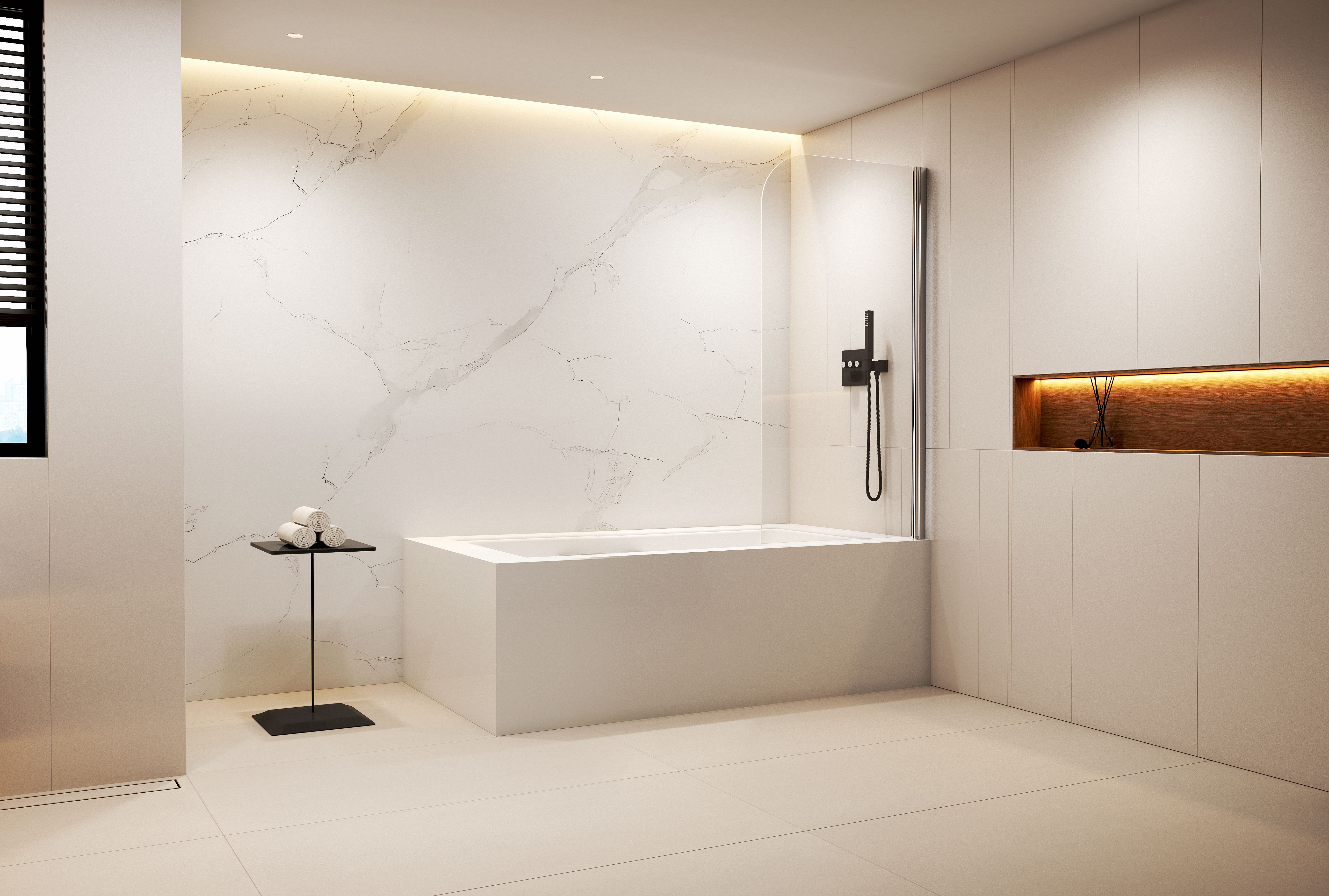
What Are Shower Door Glass Options?
Shower door glass options are the combinations of base glass, visual treatment and surface finish that a manufacturer offers for a given door model. In SHKL product data, the same seven options are listed for multiple shower door models: clear glass, tinted glass, laminated glass, flute glass, chemically frosted glass, easy-clean and film-coated.
They are not all the same category of choice. Clear, tinted, laminated, flute and chemically frosted describe the glass itself or its visual character. Easy-clean and film-coated describe a surface treatment or an added film. That distinction matters because a buyer can specify a tinted, laminated, easy-clean door — three decisions in one line item. If the quotation only says 'frosted glass', the buyer still does not know whether the privacy comes from a chemical frost, a pattern or a film.
The Real Problem: Glass Types and Glass Treatments Get Mixed Up
The most common specification error is treating every label in a glass list as if it were a separate glass type. In practice, the seven SHKL options answer different buyer questions. Clear, tinted and laminated define the glass construction or color. Flute and chemically frosted define a visual pattern or surface character. Easy-clean and film-coated define how the surface is treated or what is applied to it.
This matters at three points in a project. First, privacy: a buyer who orders 'frosted' for a street-facing bathroom may receive a chemical frost with a different visual density than expected. Second, cleaning: easy-clean is a surface treatment, not a privacy option, and it should not be selected as a substitute for frosted or patterned glass. Third, compliance: a model-specific glass certificate or test report is separate from the color or pattern label, and the document must match the selected thickness and construction.
A useful rule is to specify the door model, the base glass or pattern, the surface treatment, the thickness and the documentation in that order. That sequence keeps the visual choice, the maintenance choice and the compliance choice from being collapsed into a single word.
Industry Background: Why Glass Specification Is Now a Buyer Decision
The global shower doors market was valued at USD 13.5 billion in 2023, according to Cognitive Market Research. The same research source reports that frameless shower glass doors hold a 75% market share in North America as of 2025. These are commercial research estimates, not supplier rankings, but they explain why glass options receive more attention in procurement: frameless and low-frame designs expose more glass, so color, pattern and surface treatment become visible design decisions rather than minor details.
Compliance expectations have also become more explicit. EN 14428:2015+A1:2018 specifies functional requirements and test methods for shower enclosures for domestic purposes in Europe. ASTM C1048-18 is the standard specification for heat-strengthened and fully tempered flat glass. In the United States context, the National Glass Association design guide states that shower-enclosure glass should be safety glazing meeting the impact requirement of CPSC 16 CFR 1201, and it describes monolithic tempered glass of at least 3/8 inch or 10 mm for the frameless category covered by that guide. That 10 mm figure is guidance for a defined category, not a universal minimum for every framed, sliding or hinged door.
For buyers, the practical effect is that glass choice is no longer only a showroom aesthetic. It is part of the specification file that has to match the door type, the hardware material, the destination market's safety-glazing requirements and the cleaning routine the end user will accept.
SHKL's Seven Glass Craftsmanship Options Explained
SHKL lists the same seven glass craftsmanship options across several shower door models, including KL-AS5605110-5 and KL-AS5511312. The product data names the options but does not assign a performance rating to each one, so the notes below focus on what the label refers to and what a buyer should confirm before ordering.
1. Clear Glass
Clear glass is transparent base glass with no added color or pattern. It gives the most direct view of the shower interior and the bathroom finishes behind it. Clear glass is usually chosen when the design intent is openness, when the bathroom is small and needs visual depth, or when the tile or stone is part of the display. The buyer check is privacy: clear glass is the least private option in the list, so it should not be specified for a bathroom that is visible from a bedroom, corridor or exterior window without another privacy measure.
2. Tinted Glass
Tinted glass is color-toned base glass. It changes the appearance of the enclosure and can make the glass read as a darker or warmer surface depending on the tint. Tinted glass is a visual and privacy-related choice, not a surface coating. The buyer check is color control: request a sample under the project lighting, confirm the tint name or reference, and ask how the supplier controls batch consistency. A tint that looks subtle in a showroom can look much darker in a small bathroom with warm lighting.
3. Laminated Glass
Laminated glass is a multi-layer glass construction with an interlayer. It is a construction choice rather than a color or pattern, and it can be combined with other options in the specification. The buyer check is documentation: confirm the interlayer type, the glass thickness, and the model-specific safety-glazing certificate or test report for the destination market. Do not assume that the word 'laminated' alone proves compliance for every project; the document must match the model and the market.
4. Flute Glass
Flute glass has a fluted or reeded pattern that adds texture and partially obscures the view. It is often used when the design wants pattern and privacy without a flat frosted surface. The buyer check is direction and cleaning: confirm whether the flutes run vertically or horizontally, review a sample for the privacy level, and ask how the pattern should be cleaned. Patterned glass can collect dust and water marks in the recesses, so the cleaning routine should be agreed before the specification is locked.
5. Chemically Frosted Glass
Chemically frosted glass has a frosted surface produced by a chemical treatment. It diffuses the view and changes the glass from transparent to a softer, more private surface. The buyer check is finish consistency: review a sample for frost uniformity, check how fingerprints and water marks appear, and confirm the exact process name with the supplier. 'Chemically frosted' should not be used interchangeably with 'acid-etched' unless the supplier confirms that the process is the same for the quoted model.
6. Easy-Clean Glass
Easy-clean glass is a surface treatment intended to make routine cleaning easier. It is not a privacy option and it does not change the base glass from clear to frosted. The buyer check is treatment definition: ask what the treatment is, which cleaning products should be avoided, and what the supplier's warranty says about the surface. Easy-clean is most useful when the end user will follow a simple cleaning routine; it should not be treated as a substitute for regular maintenance.
7. Film-Coated Glass
Film-coated glass carries a factory-applied film or coating. The term can refer to different film constructions in the market, so the buyer should not assume a specific function from the label alone. The buyer check is film definition: confirm whether the film is a protective film, a performance film or another coating, how the edges are finished, and what the warranty covers. If the project specifier uses the term 'film-coated' as a performance requirement, the quotation should state the film type and function in writing.
Quick Selection Tips
- If privacy is the priority, start with chemically frosted or flute glass, then decide whether a tint is also needed.
- If the bathroom should feel open, start with clear glass and use the hardware and frame design to carry the visual weight.
- If the project has a defined cleaning regime, specify easy-clean and confirm the cleaning products in writing.
- If the specifier requires a multi-layer glass construction, start with laminated glass and request model-specific documentation.
- If the word 'film-coated' appears in the specification, define the film function before the quotation is compared.
- Keep the same glass option across door models when a project has repeated bathroom types, so the visual result stays consistent.
How the Options Apply to SHKL Models
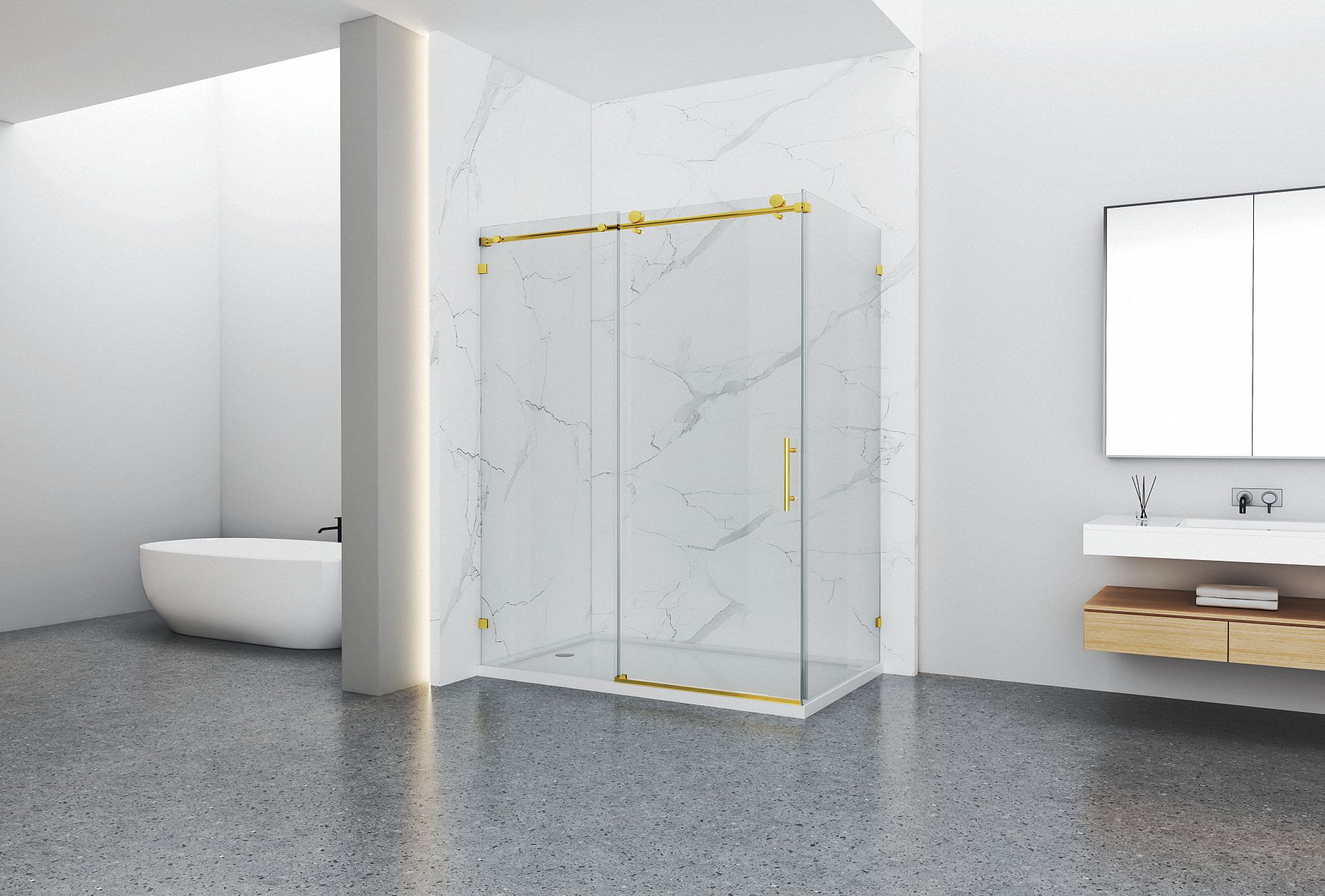
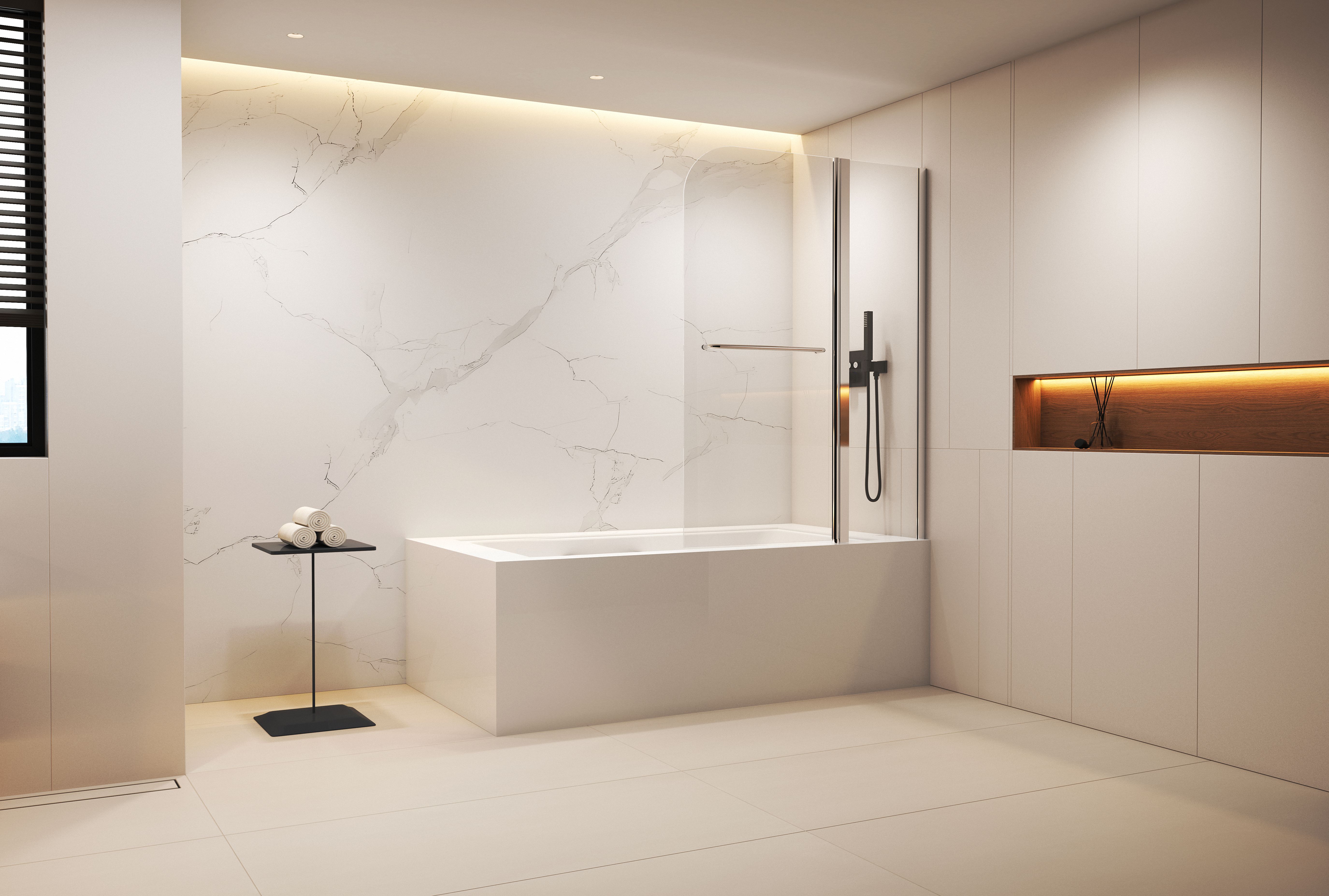
KL-AS5605110-5 is a bathtub shower door made of aluminium alloy. KL-AS5511312 is a sliding shower door made of 304 stainless steel. Both are intended for residential construction and commercial hospitality applications, and both list the same seven glass craftsmanship options: clear glass, tinted glass, laminated glass, flute glass, chemically frosted glass, easy-clean and film-coated.
The two models show why glass and hardware should be specified together. A bathtub shower door and a sliding shower door solve different space problems, and the hardware material changes the maintenance and corrosion context. Because the glass list is the same, a buyer can keep one glass specification across a bathroom package even when the door type and hardware material change. That is useful for residential projects with repeated bathroom layouts and for hospitality projects that want a standard glass appearance across rooms.
| Model | Door type | Hardware material | Glass options listed | Application |
|---|---|---|---|---|
| KL-AS5605110-5 | Bathtub shower door | Aluminium alloy | Clear, tinted, laminated, flute, chemically frosted, easy-clean, film-coated | Residential construction, commercial hospitality |
| KL-AS5511312 | Sliding shower door | 304 stainless steel | Clear, tinted, laminated, flute, chemically frosted, easy-clean, film-coated | Residential construction, commercial hospitality |
Step-by-Step: How to Choose a Glass Option
- Start with the door type and the room layout. A bathtub shower door such as KL-AS5605110-5 and a sliding shower door such as KL-AS5511312 serve different spaces. Decide the door configuration first, then use the glass option to solve the visual and privacy requirement.
- Set the privacy level before the color. Clear glass is the most open option. Tinted glass changes the appearance and can reduce the view. Chemically frosted and flute glass add surface privacy. If the shower is visible from a bedroom, corridor or exterior window, start with a privacy option rather than trying to solve the issue with a tint alone.
- Separate the visual choice from the surface treatment. Choose clear, tinted, laminated, flute or chemically frosted as the glass character. Then decide whether easy-clean or film-coated is needed. Do not use easy-clean as a privacy specification, and do not use film-coated as a substitute for a frosted or patterned surface.
- Confirm thickness and safety-glazing documentation. SHKL's published product information lists 6 mm, 8 mm, 10 mm and 12 mm tempered glass options for shower doors. Request the model-specific thickness and the matching certificate or test report. For Europe, check EN 14428:2015+A1:2018. For the United States context, check the applicable safety-glazing requirement, including CPSC 16 CFR 1201 where it applies, and use the National Glass Association design guide as technical guidance rather than as a substitute for local code.
- Validate with a sample. Review the glass option under the lighting condition of the project. Check color, pattern direction, reflection, privacy level and cleaning behavior. A sample is especially important for tinted, flute, chemically frosted and film-coated options, because these are the options most likely to look different from a catalog image.
- Write the full specification into the quotation and purchase order. Include the model, door type, hardware material, glass option, thickness, pattern direction if applicable, documentation, packaging and order quantity. Ask for a line-item quotation rather than a single lump sum, so the glass option can be compared without hidden assumptions.
Use Cases: Residential Construction vs Commercial Hospitality
Residential construction
In residential bathrooms, the glass choice usually follows the privacy requirement and the visual size of the room. Clear glass is a common starting point for a compact bathroom that needs visual depth. Tinted glass can be used where the buyer wants a darker glass surface and some view control. Chemically frosted or flute glass is more suitable where the shower is visible from a bedroom, hallway or neighboring property. Easy-clean is a practical addition for family bathrooms where cleaning frequency matters. Laminated glass should be specified with model-specific documentation when the project requires a multi-layer construction.
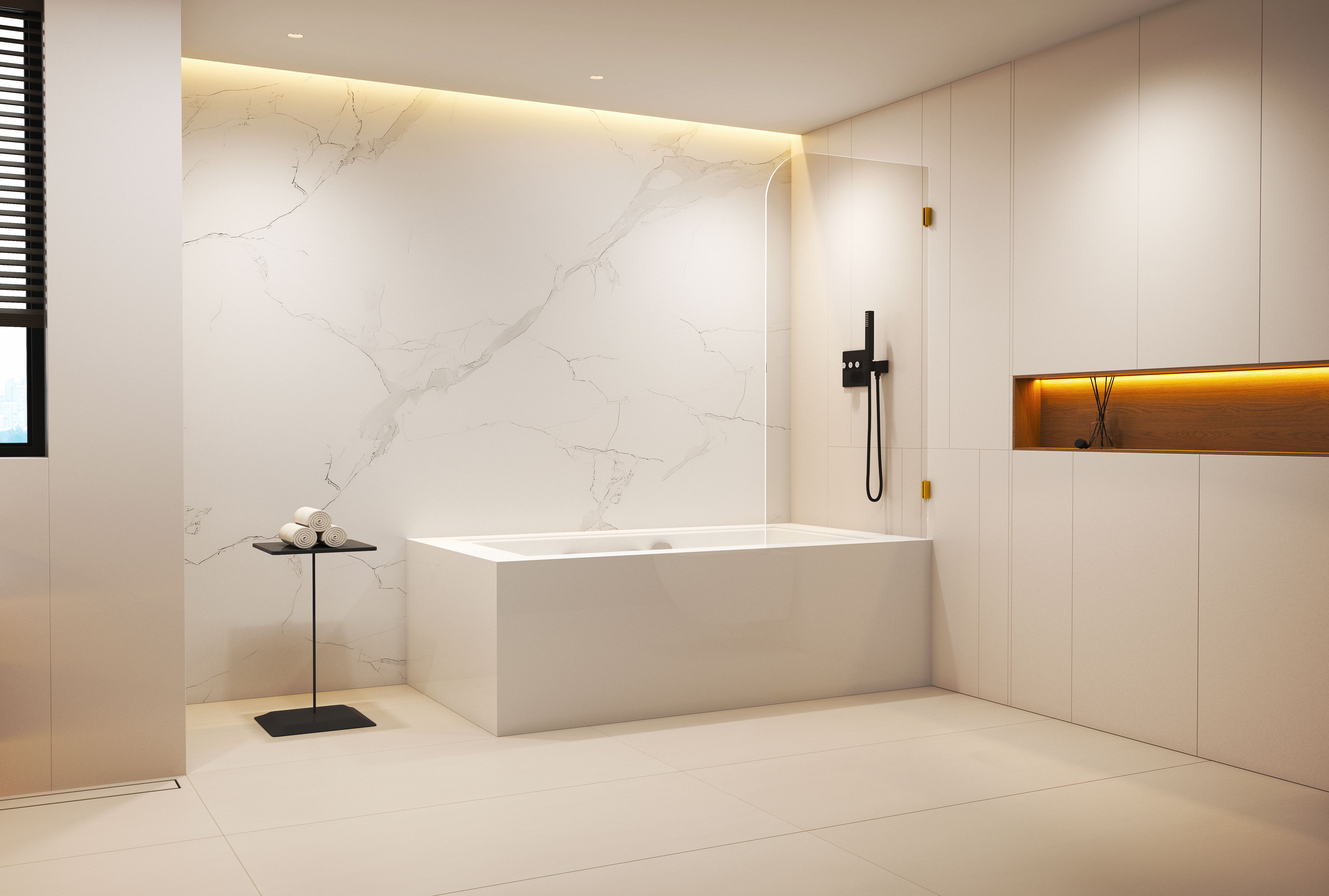
For a bathtub installation, KL-AS5605110-5 provides a direct example of a bathtub shower door with aluminium alloy hardware and the full seven-option glass list. For a sliding configuration, KL-AS5511312 provides the same glass list with 304 stainless steel hardware. Keeping the glass option consistent across both models can simplify a residential package with multiple bathrooms.
Commercial hospitality
In hotels, serviced apartments and commercial hospitality projects, the glass specification has to survive repeated cleaning and a consistent room-to-room appearance. Easy-clean glass is often relevant because housekeeping teams follow a defined cleaning routine. Tinted or chemically frosted glass can support privacy in rooms where the bathroom is visible from the sleeping area or the entrance. Laminated glass may be specified where the project's safety-glazing review calls for a multi-layer construction. Film-coated glass should be defined by film type and function, because hospitality buyers need to know what the film is for and how it should be maintained.
SHKL lists the same seven glass options across other shower door models as well, including KL-AS5507310 and KL-AS5577310 hinge shower doors, KL-AS001-1 shower screen, KL-AS5104310 frameless shower door, KL-AS5210422 arc shower door and KL-AS5608212 sliding shower door. That range allows a hospitality project to keep one glass language while mixing door configurations across different room types.
Comparison Table: The Seven Glass Options at a Glance
The table below uses SHKL product data. It confirms availability on the two example models and lists the buyer check for each option. It does not assign a performance ranking, because the source data does not provide a model-by-model performance rating for each glass option.
| Glass option | What the label refers to | Available on KL-AS5605110-5 | Available on KL-AS5511312 | Buyer check before ordering |
|---|---|---|---|---|
| Clear glass | Transparent base glass with no added color or pattern | Yes | Yes | Privacy expectation, cleaning visibility and sample under project lighting |
| Tinted glass | Color-toned base glass | Yes | Yes | Tint name or reference, density and batch consistency |
| Laminated glass | Multi-layer glass construction with an interlayer | Yes | Yes | Interlayer type, thickness and model-specific safety-glazing documentation |
| Flute glass | Fluted or reeded patterned glass | Yes | Yes | Pattern direction, privacy level and cleaning routine |
| Chemically frosted glass | Frosted surface produced by a chemical treatment | Yes | Yes | Frost uniformity, fingerprint behavior and sample finish |
| Easy-clean | Surface treatment intended to simplify cleaning | Yes | Yes | Treatment type, cleaning-product restrictions and warranty terms |
| Film-coated | Factory-applied film or coating | Yes | Yes | Film type and function, edge finish and warranty terms |
FAQ
Are SHKL glass options safety glass, and which standards should a buyer check?
SHKL's published product information lists 6 mm, 8 mm, 10 mm and 12 mm tempered glass options for shower doors, and the product data lists clear, tinted, laminated, flute, chemically frosted, easy-clean and film-coated glass across models such as KL-AS5605110-5 and KL-AS5511312. Tempered glass is the base safety-glass category referenced in ASTM C1048-18, which covers heat-strengthened and fully tempered flat glass. A model-specific certificate or test report is still needed for the destination market. In Europe, EN 14428:2015+A1:2018 specifies functional requirements and test methods for domestic shower enclosures. In the United States context, the National Glass Association design guide states that shower-enclosure glass should be safety glazing meeting the impact requirement of CPSC 16 CFR 1201, and it describes monolithic tempered glass of at least 3/8 inch or 10 mm for the frameless category covered by that guide. That 10 mm figure is not a universal minimum for every framed, sliding or hinged door. Ask SHKL for the model-specific glass certificate, thickness and test documentation before approval.
Can SHKL apply the same glass option across different door types and hardware materials?
Yes, based on the product data. KL-AS5605110-5 is a bathtub shower door with aluminium alloy hardware, and KL-AS5511312 is a sliding shower door with 304 stainless steel hardware. Both list clear, tinted, laminated, flute, chemically frosted, easy-clean and film-coated glass. The same seven options are also listed for other SHKL models, including KL-AS5507310 and KL-AS5577310 hinge shower doors, KL-AS001-1 shower screen, KL-AS5104310 frameless shower door, KL-AS5210422 arc shower door and KL-AS5608212 sliding shower door. This allows a project to keep a consistent glass specification while changing the door configuration or hardware material. Confirm the final combination in the quotation, because the product data lists options rather than a model-by-model performance rating.
Does the glass option change the price, and how should buyers compare quotations?
The source material used for this article does not publish glass-option prices, so no price difference should be assumed from the label alone. A quotation should be compared line by line: door model, door type, hardware material such as aluminium alloy or 304 stainless steel, glass option, glass thickness, size, pattern direction if applicable, documentation, packaging and order quantity. A clear glass door and a chemically frosted laminated easy-clean door are not the same specification even if both are described as shower door glass. Ask for a line-item quote against the named model rather than a single lump sum.
Can buyers request a sample before committing to a glass option?
Sample validation is the practical way to judge a glass option. Request the sample against a named model, such as KL-AS5605110-5 or KL-AS5511312, and state the glass option, thickness, hardware material and the lighting condition you will use for review. Check color, pattern direction, reflection, privacy level and cleaning behavior. SHKL can be contacted at info@shklbathroom.com or WhatsApp +86 13790005061. For a project package, ask for the current catalog and confirm the sample lead time in writing.
What lead time should buyers plan for?
The source material does not publish a standard lead time for glass options. Lead time should be confirmed against the selected model, glass option, thickness, hardware material, order quantity and destination. Ask for the lead time in the quotation and separate sample lead time from production lead time. For project scheduling, request the production plan and the inspection point before shipment, especially when the glass option is not standard clear glass. Send the model, glass option and target date to SHKL at info@shklbathroom.com or WhatsApp +86 13790005061 to receive a project-specific answer.
Next Step: Build a Glass Specification You Can Quote
Start with the door model, then confirm the glass option, thickness, hardware material and documentation. SHKL can support residential construction and commercial hospitality buyers with model-specific information for KL-AS5605110-5, KL-AS5511312 and the wider shower door range.
Contact SHKL at info@shklbathroom.com or WhatsApp +86 13790005061. Download the current catalog here: SHKL product brochure. For company background and product pages, visit www.shklbathroom.com.
Conclusion
Shower door glass options are a specification system, not a color card. Clear, tinted and laminated define the glass construction or appearance. Flute and chemically frosted define the visual character. Easy-clean and film-coated define the surface treatment or film. When these categories are mixed, buyers risk privacy complaints, cleaning surprises and documentation gaps.
For SHKL, the seven options are listed across models including KL-AS5605110-5, a bathtub shower door in aluminium alloy, and KL-AS5511312, a sliding shower door in 304 stainless steel. The practical sequence is to choose the door type, set the privacy level, select the base glass or pattern, decide on easy-clean or film-coated, confirm thickness and safety-glazing documents, validate a sample, and then lock the full specification into the quotation. That sequence gives residential and hospitality buyers a glass choice that can be compared, documented and repeated across a project.
Have Questions or Need More Details?
Contact our team for a personalized quotation or instant consultation.
Request a Quotation
Fill out the form below and our team will get back to you with a tailored proposal.
WhatsApp Direct Chat
Prefer to chat in real-time? Message us on WhatsApp for instant assistance & quick answers.
- Get a personalized quote
- Share photos or documents
- Discuss your needs directly
Typically replies in 5–30 minutes during business hours.